2026 Transfer Market: Inflation Drives Player Valuations Up 8%
The 2026 Transfer Market: How Inflation is Driving Up European Player Valuations by an Average of 8% is a critical trend, reflecting broader economic pressures influencing football’s financial landscape.
The global economic landscape continues to reshape industries, and professional football is no exception. In the highly anticipated 2026 Transfer Market: How Inflation is Driving Up European Player Valuations by an Average of 8%, clubs and agents are navigating a new reality where economic forces are dictating player prices more than ever before. This inflationary pressure is creating both challenges and opportunities across Europe’s top leagues, demanding strategic responses from all stakeholders.
Understanding the Economic Drivers Behind Transfer Inflation
The surge in player valuations isn’t a standalone phenomenon; it’s deeply rooted in a complex interplay of macroeconomic factors. Inflation, a persistent feature of the global economy, directly diminishes the purchasing power of money, meaning clubs need to spend more to acquire the same level of talent. This economic reality is compounded by other financial dynamics that are unique to the football industry.
Global Economic Trends and Their Football Implications
Broader economic inflation, driven by factors like supply chain disruptions, increased production costs, and quantitative easing measures, inevitably trickles down to specialized markets like professional football. When general prices rise, so do the costs associated with running a club, from stadium maintenance to staff wages, ultimately impacting transfer budgets.
- Rising Operational Costs: Clubs face higher expenses for everything from energy to travel, reducing available funds for transfers unless revenues increase proportionally.
- Wage Demands: Players and their agents are increasingly factoring inflation into contract negotiations, pushing up salary expectations and, by extension, transfer fees.
- Currency Fluctuations: Exchange rate volatility between major currencies can significantly alter the cost of international transfers, adding another layer of complexity.
Furthermore, the increasing commercialization of football, with ever-larger broadcasting deals and sponsorship agreements, paradoxically contributes to this inflation. While these deals inject more money into the system, they also set new benchmarks for financial transactions, allowing clubs to justify higher outlays for top-tier talent. The demand for elite players remains high, and with more money circulating, prices naturally climb.
The economic environment of the mid-2020s has created a unique storm for the transfer market. While clubs are eager to strengthen their squads, they must contend with a financial climate that makes every deal more expensive. This necessitates a more sophisticated approach to scouting, negotiation, and financial planning, ensuring that investments yield tangible returns on the pitch.
The 8% Valuation Increase: A Deep Dive into the Data
The reported average 8% increase in European player valuations for the 2026 Transfer Market is a significant figure that demands closer examination. This percentage isn’t arbitrary; it reflects a careful analysis of market trends, club financial statements, and expert projections.
Methodology Behind the Valuation Surge
This 8% figure is typically derived from a combination of advanced econometric models, data from previous transfer windows, and projections based on current economic indicators. Analysts consider various factors:
- Player Performance Metrics: On-field contributions, statistical output, and potential for future growth remain primary drivers.
- Contract Length and Age: Players with longer contracts and younger ages naturally command higher fees.
- Club Financial Health: The selling club’s financial situation and the buying club’s budget capacity play crucial roles.
- Market Demand: The number of clubs interested in a player can quickly drive up their price.
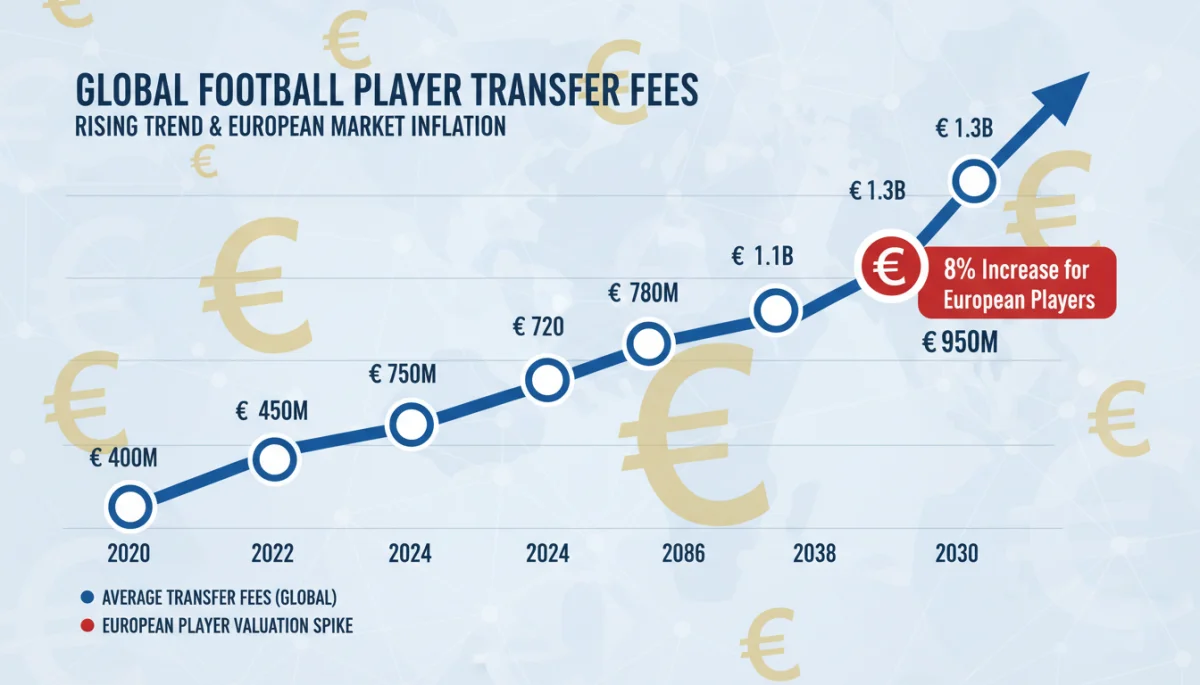
This average increase, while substantial, doesn’t apply uniformly across all player types or leagues. Elite players in their prime, particularly those with strong international profiles, are likely to see even higher percentage increases. Conversely, older players or those in less prominent leagues might experience more modest rises. The 8% represents a broad market shift, indicating that securing talent across the board has become more expensive.
The implications of this 8% rise are far-reaching. Clubs with robust financial backing might find themselves in a stronger position, able to absorb the increased costs. However, clubs with tighter budgets will need to be more creative, focusing on youth development, shrewd scouting, and maximizing player sales to balance their books. This creates a two-tiered market where financial power dictates access to top talent.
Impact on Top European Leagues: Winners and Losers
The inflationary pressures of the 2026 Transfer Market will not affect all European leagues equally. While the average valuation increase is 8%, specific leagues and clubs will experience this trend differently, leading to distinct winners and losers in the race for talent.
Financial Disparities and Strategic Responses
Leagues with traditionally higher revenues, such as the English Premier League, La Liga, and the Bundesliga, are generally better equipped to handle rising player valuations. Their substantial broadcasting deals, global fan bases, and commercial partnerships provide a financial cushion that smaller leagues often lack. These clubs can absorb higher transfer fees and wages, maintaining their competitive edge.
- Premier League: Continues to lead in spending power, potentially widening the gap with other leagues by attracting top talent despite increased costs.
- La Liga & Bundesliga: Strong financial structures allow them to compete, but they may face challenges in retaining players targeted by wealthier English clubs.
- Ligue 1 & Serie A: Clubs here might need to rely more on player development and strategic sales to remain competitive, often acting as feeder leagues for richer clubs.
Conversely, clubs in smaller leagues, or those with less robust financial models, will face significant challenges. They may struggle to retain their best players, as offers from wealthier clubs become increasingly difficult to match. This could lead to a further concentration of talent in a few dominant leagues, potentially impacting the competitive balance of European football.
The strategic responses to this inflation will vary. Some clubs might double down on data analytics to identify undervalued players, while others might focus on developing robust youth academies. The ability to scout effectively and negotiate shrewdly will become even more critical for success in this inflated market. Ultimately, the 2026 Transfer Market will highlight the growing financial disparities within European football, challenging traditional hierarchies and forcing clubs to innovate.
Player Agents and Negotiations in an Inflated Market
Player agents play a pivotal role in the transfer market, and their influence is magnified in an inflationary environment. As player valuations rise, so too does the complexity of negotiations, with agents acting as key intermediaries between clubs and players.
Navigating Increased Demands and Expectations
For agents, the 2026 Transfer Market presents both opportunities and challenges. On one hand, higher valuations mean potentially larger commissions and greater leverage in contract talks. On the other hand, they must navigate increasingly complex financial landscapes, ensuring their clients receive fair compensation while also facilitating successful transfers.
- Increased Commission Potential: With higher transfer fees, agents stand to earn more from percentage-based commissions.
- Sophisticated Contract Demands: Agents are pushing for inflation-adjusted wages, performance bonuses, and favorable release clauses to protect their clients’ value.
- Market Intelligence: Staying abreast of economic trends and club financial health is crucial for effective negotiation.
Negotiations are becoming more protracted and intricate. Clubs are scrutinizing every aspect of a deal, from the transfer fee to the player’s wage structure, seeking to mitigate the risks associated with inflated prices. Agents, in turn, are becoming more adept at highlighting their clients’ unique value propositions, emphasizing potential commercial returns and on-field impact to justify higher costs.
The relationship between clubs and agents will be tested in this environment. Trust and transparency will be paramount, as both parties seek to achieve their objectives in a market where every dollar counts. Successful agents will be those who can build strong relationships, understand the economic nuances, and advocate effectively for their clients, ensuring they thrive amidst the rising costs.
Strategies for Clubs: Adapting to Higher Player Valuations
In the face of an 8% average increase in player valuations, European clubs must adopt innovative strategies to remain competitive and financially stable. A business-as-usual approach will simply not suffice in the 2026 Transfer Market.
Smart Spending and Sustainable Growth
Clubs need to move beyond reactive spending and embrace proactive financial planning. This involves a multi-faceted approach that balances immediate needs with long-term sustainability. The focus must shift from simply acquiring talent to acquiring the right talent at a justifiable price, considering the inflated market.
- Enhanced Scouting Networks: Investing in robust global scouting to identify undervalued talent in emerging markets before their prices skyrocket.
- Youth Academy Investment: Prioritizing and expanding youth development programs to produce homegrown talent, reducing reliance on expensive external transfers.
- Data-Driven Recruitment: Utilizing advanced analytics to assess player value, predict future performance, and identify players who fit specific tactical and financial profiles.
- Strategic Player Sales: Maximizing revenue from player sales through effective negotiation and timing, reinvesting profits wisely into the squad.
Furthermore, clubs are exploring alternative funding models, such as private equity investments and innovative fan engagement initiatives, to boost their financial firepower. The ability to generate diverse revenue streams will be crucial in mitigating the impact of inflation on transfer budgets.
Ultimately, the clubs that succeed in the 2026 Transfer Market will be those that combine financial prudence with strategic ambition. They will be the ones who can identify talent, develop it, and acquire it efficiently, ensuring that every investment contributes to both on-field success and long-term financial health. This requires a holistic approach that integrates sporting, commercial, and financial departments.
The Future Outlook: Beyond 2026 and Continuous Inflation
While the 2026 Transfer Market presents immediate challenges, the broader trend of inflation in player valuations is likely to continue beyond this period. Understanding this long-term outlook is crucial for sustainable planning in European football.
Long-Term Trends and Industry Evolution
The factors driving inflation – global economic trends, increasing commercialization, and intense competition for elite talent – are not temporary. They represent fundamental shifts in the football industry. Therefore, clubs must prepare for a future where player acquisition costs remain high, if not continue to rise.
- Financial Fair Play (FFP) Evolution: Regulations will likely adapt to the new economic realities, potentially influencing spending limits and financial reporting for clubs.
- Emerging Markets: The scouting and recruitment landscape will continue to broaden, with increased focus on untapped regions offering potential value.
- Technological Integration: AI and data analytics will become even more sophisticated in identifying talent and optimizing transfer decisions, moving beyond traditional scouting.
Clubs will need to cultivate a culture of continuous adaptation, constantly re-evaluating their strategies and operational models. This includes fostering strong relationships with feeder clubs, investing in sports science to maximize player longevity, and exploring new revenue streams through digital innovation and global brand expansion. The emphasis will be on creating resilient and agile organizations capable of thriving in a dynamic economic environment.
The future of the transfer market will be characterized by greater financial complexity and increased strategic depth. Clubs that embrace foresight, innovation, and sustainable practices will be best positioned to navigate the challenges of continuous inflation, ensuring their competitive standing in the evolving world of European football.
| Key Aspect | Brief Description |
|---|---|
| 8% Valuation Increase | European player valuations are up by an average of 8% in 2026, driven by economic inflation. |
| Economic Drivers | Global inflation, rising operational costs, and increased commercialization fuel transfer market prices. |
| Club Strategies | Clubs must adopt enhanced scouting, youth development, and data-driven recruitment to adapt. |
| Agent’s Role | Agents navigate complex negotiations, pushing for inflation-adjusted terms and higher commissions. |
Frequently Asked Questions About the 2026 Transfer Market
The 8% increase is primarily driven by global economic inflation, which raises operational costs for clubs and influences wage demands. Additionally, growing commercial revenues in football contribute to higher spending capacity, pushing up player prices.
Inflation erodes purchasing power, meaning clubs need to allocate more funds to acquire the same quality of player. It also influences player wage expectations and the overall cost of running a football operation, all of which feed into higher transfer fees.
While all leagues are affected, financially stronger leagues like the Premier League can better absorb these costs. Leagues with tighter budgets may struggle more, potentially losing key players to wealthier clubs and facing greater challenges in squad building.
Clubs can focus on strengthening youth academies, implementing data-driven scouting to find undervalued talent, and negotiating shrewdly. Diversifying revenue streams and strategic player sales are also crucial to maintain financial health amidst rising costs.
Most experts predict that the upward trend in player valuations will continue. The underlying economic drivers and increasing global commercialization of football suggest that high transfer costs are likely to be a persistent feature of future transfer markets.
Conclusion
The 2026 Transfer Market marks a pivotal moment, with an average 8% increase in European player valuations underscoring the profound impact of inflation on football’s financial landscape. Clubs, agents, and players alike are navigating a new era where economic realities dictate strategy. Adapting through smart scouting, youth development, and robust financial planning will be paramount for success, ensuring that European football continues to thrive despite the evolving economic pressures.
