La Liga 2026: Financial Fair Play Reshaping Transfers by 15%
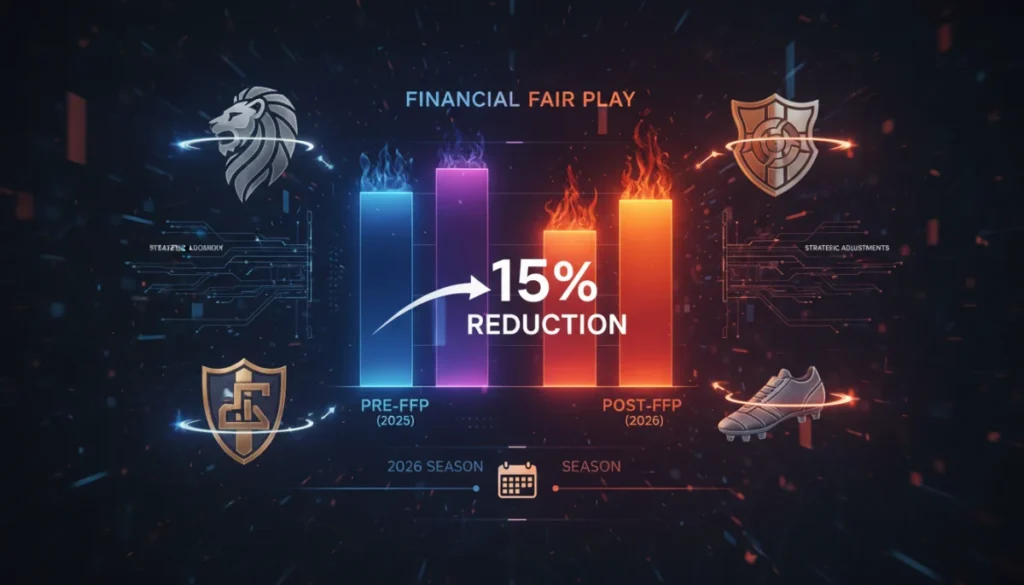
La Liga’s new Financial Fair Play regulations are set to reshape club transfer strategies by an estimated 15% for the 2026 season, compelling teams to adopt more prudent and sustainable approaches to player acquisitions and squad management.
The upcoming La Liga 2026 Season: How New Financial Fair Play Regulations Are Reshaping Club Transfer Strategies by 15% – RECENT UPDATES marks a pivotal moment for Spanish football. As clubs navigate an increasingly complex financial landscape, the new regulations are poised to dramatically alter how teams approach player acquisitions, sales, and overall squad development. This shift isn’t merely procedural; it’s a fundamental recalibration designed to foster long-term sustainability and competitive balance.
Understanding La Liga’s Evolving Financial Fair Play Landscape
Financial Fair Play (FFP) in La Liga has always been a stringent framework, often cited as one of the toughest in European football. Its primary goal is to prevent clubs from spending more than they earn, thereby avoiding excessive debt and ensuring the league’s overall financial health. For the 2026 season, these regulations are not just being tweaked; they are undergoing a significant overhaul, reflecting lessons learned and adapting to the modern economic realities of professional football.
The core of these updates centers on an even stricter control over salary limits and transfer spending, directly impacting a club’s ability to register new players. This proactive stance by La Liga aims to solidify financial stability across all divisions, reducing the risk of clubs facing severe financial penalties or even administrative relegation. The anticipated 15% reshaping of transfer strategies is a direct consequence of these tightened controls, pushing clubs towards more innovative and sustainable models.
The Genesis of Stricter Controls
The push for enhanced FFP regulations stems from several factors, including the global economic shifts and the need to maintain La Liga’s competitive integrity. Past seasons have seen clubs, particularly larger ones, struggle with financial constraints despite significant revenues. This has highlighted the necessity for a more robust and adaptive system.
- Increased scrutiny on club debt levels.
- Dynamic salary caps adjusted based on revenue and expenditure.
- Emphasis on long-term financial planning over short-term gains.
In essence, La Liga’s evolving FFP framework for 2026 is a commitment to fostering a healthier, more predictable financial environment, ensuring that the spectacle on the pitch is built upon a solid economic foundation. This will inevitably lead to more strategic decisions in the transfer market, moving away from impulsive, high-spending habits.
The 15% Reshaping: What It Means for Club Transfer Budgets
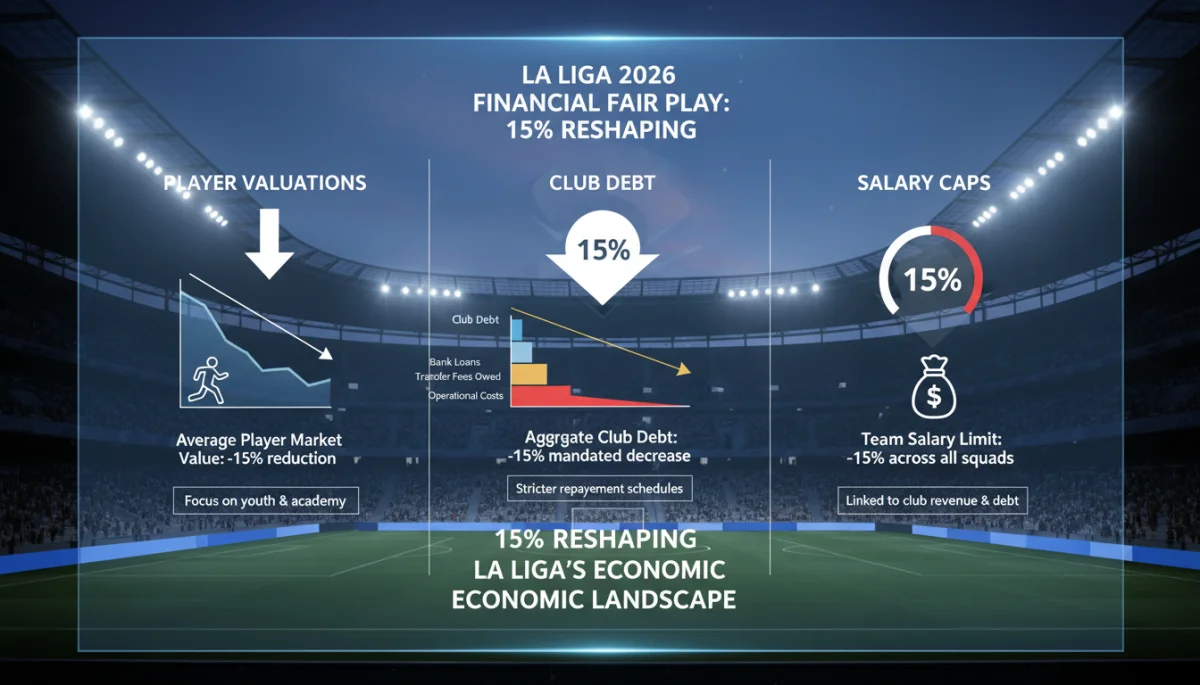
The projected 15% reshaping of club transfer strategies is not a uniform cut across all clubs, but rather an aggregated effect of the new FFP rules pushing for greater fiscal responsibility. This percentage signifies a noticeable shift in how much clubs can, or are willing to, allocate towards player acquisitions and salaries. For some clubs, particularly those already operating close to their FFP limits, this could mean a significant reduction in their purchasing power.
This reshaping forces clubs to be more judicious with every euro spent. It’s about optimizing resources, identifying value, and ensuring that every transfer aligns with the club’s long-term financial health. The days of speculative, high-cost transfers without clear financial backing are becoming increasingly challenging to justify under the new regime.
Impact on Player Valuations and Salaries
One of the most immediate effects of this change will be on player valuations and salary negotiations. With tighter budgets, clubs will likely become more conservative in their offers, potentially leading to a slight deflation in the transfer market for certain player profiles. Players and their agents will need to adjust their expectations accordingly.
- Reduced willingness to pay exorbitant transfer fees.
- Stricter limits on player wages and contract lengths.
- Increased focus on performance-based incentives rather than fixed high salaries.
Ultimately, the 15% reshaping illustrates La Liga’s determination to foster a more sustainable ecosystem. Clubs will be compelled to prioritize sound financial management, making every transfer decision a calculated move rather than a lavish expenditure. This could lead to a more level playing field, where strategic acumen is as important as financial muscle.
Strategic Adaptations: How Clubs Are Responding to New FFP
In anticipation of the 2026 FFP updates, La Liga clubs are already devising sophisticated strategies to navigate the stricter financial landscape. This proactive approach is crucial, as delayed action could lead to significant competitive disadvantages. Clubs are focusing on several key areas to ensure compliance while remaining competitive.
These adaptations are not just about cutting costs; they are about fostering a culture of financial prudence and maximizing existing resources. Teams are exploring innovative ways to generate revenue, optimize squad value, and develop talent from within, rather than relying solely on the transfer market for immediate solutions.
Youth Academy Investment and Player Development
A significant shift is observed in the increased investment in youth academies. Developing homegrown talent offers a cost-effective alternative to expensive external transfers and aligns perfectly with FFP objectives. Clubs can nurture players from a young age, integrating them into the first team with minimal transfer outlay.
- Greater allocation of resources to scouting and youth infrastructure.
- Focus on long-term player development pathways.
- Selling academy graduates for profit to generate FFP-friendly revenue.
Creative Transfer Mechanisms and Loan Deals
Clubs are also becoming more adept at utilizing creative transfer mechanisms. This includes structured payment plans for transfers, swap deals, and more frequent use of loan agreements with purchase options. These methods allow clubs to spread financial commitments over several years, easing immediate FFP pressure.
The ultimate goal for clubs is to maintain competitive squads within the new financial parameters. This demands a more holistic approach to squad building, where financial sustainability is as critical as on-field performance. The strategic adaptations currently being implemented will define the success of La Liga teams in the 2026 season and beyond.
The Role of Player Sales and Revenue Generation in FFP Compliance
Under the updated FFP regulations for the 2026 season, player sales and robust revenue generation will become even more critical components of a club’s financial strategy. Simply put, to spend, clubs must first earn, and selling players for profit is often the quickest way to boost available transfer funds and remain FFP compliant.
This emphasis on sales isn’t just about offloading unwanted players; it’s about strategically cultivating assets. Clubs are increasingly identifying players with high resale value, nurturing their talent, and then monetizing them at the opportune moment. This cycle of acquisition, development, and sale is becoming a cornerstone of sustainable club management in La Liga.
Maximizing Commercial and Broadcast Revenues
Beyond player trading, clubs are intensifying efforts to maximize their commercial and broadcast revenues. A stronger financial base from these streams directly translates into higher FFP limits, allowing for greater flexibility in transfer spending and salary allocations.
- Aggressive pursuit of new sponsorship deals and partnerships.
- Expansion into new international markets for fan engagement and merchandise sales.
- Optimizing matchday revenues through ticketing, hospitality, and stadium experiences.
The ability to consistently generate significant revenue is what separates the financially robust clubs from those constantly battling FFP constraints. The 2026 regulations will undoubtedly sharpen clubs’ focus on these income streams, making them central to their competitive aspirations. Effective revenue generation provides the necessary buffer to absorb transfer costs and player wages without breaching FFP thresholds, ensuring long-term stability and growth.
Impact on La Liga’s Competitive Balance and Big Clubs
The new FFP regulations for the 2026 season are poised to significantly impact La Liga’s competitive balance, potentially narrowing the gap between the traditionally dominant ‘big clubs’ and the rest of the league. While top teams like Real Madrid and Barcelona possess vast revenue streams, even they are not immune to the tighter controls, which could alter their long-standing dominance in the transfer market.
For mid-table and smaller clubs, the stricter FFP might offer a more level playing field. If larger clubs are forced to be more conservative with their spending, it could prevent them from monopolizing top talent, allowing other teams a better chance to compete for players and results. This could lead to a more unpredictable and exciting league, benefiting fans and the overall appeal of La Liga.
Challenges for Traditional Powerhouses
Big clubs face unique challenges. Their high wage bills and existing debt structures mean they often operate closer to their FFP limits. The 15% reshaping will compel them to be even more strategic, focusing on high-impact, value-for-money signings rather than simply outspending rivals.
- Increased pressure to offload high-earning players to free up salary space.
- Greater reliance on astute scouting and youth academy integration.
- Potential for slower squad regeneration if sales don’t match desired transfer budget.
Conversely, smaller clubs, often with lower operating costs, might find it easier to comply with FFP, provided they manage their finances prudently. This could empower them to retain key players for longer or make shrewd acquisitions that offer significant competitive advantages. The 2026 season could therefore usher in an era where strategic financial management is as crucial as on-field performance for every club in La Liga.
Future Outlook: Sustainability and Innovation in La Liga Transfers
Looking ahead to the 2026 season and beyond, La Liga’s new Financial Fair Play regulations are undeniably steering the league towards a future defined by sustainability and innovation in transfer strategies. This isn’t just a temporary adjustment but a foundational shift in how clubs operate, emphasizing fiscal responsibility as a core tenet of competitive success. The 15% reshaping is merely the initial ripple effect of a deeper commitment to long-term financial health.
Clubs are being pushed to think creatively, not just about who they sign, but how they structure deals, develop talent, and generate revenue. This will foster a more dynamic and potentially more equitable transfer market, where strategic foresight and efficient management are rewarded over sheer spending power. The future of La Liga transfers will be less about financial muscle flexing and more about intelligent, sustainable growth.
Embracing Data Analytics and Scouting Innovations
To thrive under these new conditions, clubs are increasingly investing in advanced data analytics and innovative scouting methods. Identifying undervalued talent, both domestically and internationally, becomes paramount. This allows teams to make informed decisions that maximize their limited transfer budgets.
- Enhanced use of performance data for player recruitment.
- Global expansion of scouting networks to uncover hidden gems.
- Focus on players who fit specific tactical systems, reducing the risk of expensive flops.
The long-term vision for La Liga is a league where financial stability underpins sporting excellence. The 2026 FFP updates are a critical step in this direction, encouraging a culture of self-sufficiency and strategic planning. This focus on sustainability and innovation will not only benefit individual clubs but also strengthen La Liga’s position as a leading football competition globally, ensuring a vibrant and competitive future.
| Key Aspect | Description of Impact |
|---|---|
| Transfer Spending | Anticipated 15% reshaping due to stricter FFP limits. |
| Club Strategies | Increased focus on youth development, creative deals, and player sales. |
| Competitive Balance | Potential narrowing of gap between big and smaller clubs. |
| Revenue Generation | Crucial for FFP compliance; commercial and broadcast income key. |
Frequently Asked Questions About La Liga’s 2026 FFP
The primary goals are to ensure financial stability across all clubs, prevent excessive debt, and promote sustainable spending. These regulations aim to create a more level playing field and reduce the risk of clubs facing severe financial difficulties, ultimately safeguarding the league’s competitive integrity and long-term health.
Smaller clubs might find it easier to comply with FFP due to lower operating costs, potentially allowing them to retain key players or make shrewd, value-for-money acquisitions. If bigger clubs are more constrained, it could lead to a more balanced competition, benefiting these smaller teams.
Clubs are focusing on increased investment in youth academies, utilizing creative transfer mechanisms like loan deals with options, and prioritizing strategic player sales. They are also intensifying efforts to maximize commercial and broadcast revenues to boost their FFP limits.
It is anticipated that clubs will become more conservative in their offers, potentially leading to a slight deflation in player valuations and salary expectations. There will be stricter limits on wages and a greater emphasis on performance-based incentives rather than excessively high fixed salaries.
By promoting financial stability and fostering a more competitive league domestically, FFP aims to strengthen La Liga’s overall standing. Sustainable clubs are more likely to perform consistently at a high level in European competitions, enhancing the league’s global reputation and appeal in the long run.
Conclusion
The La Liga 2026 Season: How New Financial Fair Play Regulations Are Reshaping Club Transfer Strategies by 15% – RECENT UPDATES represents a transformative period for Spanish football. These stricter regulations are not merely an obstacle but a catalyst for more innovative, sustainable, and financially responsible club management. The projected 15% reshaping of transfer strategies underscores a fundamental shift towards prudence, emphasizing homegrown talent, strategic player sales, and diversified revenue streams. As clubs adapt, the league is poised for a future where competitive balance and financial health go hand in hand, ensuring La Liga remains a captivating and robust competition on the global stage.
