2026 Transfer Window: Navigating Post-Euro Player Valuations

The 2026 transfer window is poised to redefine player valuations across Europe’s top five leagues, with clubs meticulously planning their strategies in the wake of Euro 2024 performances to secure top talent efficiently.
The upcoming 2026 transfer window promises to be a pivotal moment for European football, as clubs from the continent’s five major leagues grapple with evolving player valuations following the conclusion of Euro 2024. This period demands strategic foresight and astute financial management, as teams look to strengthen their squads while maximizing return on investment in a highly competitive market.
The Post-Euro 2024 Landscape and Player Valuations
The aftermath of major international tournaments like Euro 2024 invariably reshapes the transfer market. Player performances on such grand stages can either dramatically inflate or deflate their market value, creating both opportunities and challenges for clubs.
For the 2026 transfer window, teams have had ample time to analyze the impact of Euro 2024 on individual players. This analysis extends beyond immediate on-field heroics, delving into sustained form, injury history, and potential for future growth. Clubs are not just looking at stars but also at breakout talents whose stock might have soared unexpectedly.
Immediate Impact on Star Players
Players who delivered exceptional performances in Euro 2024 often see their valuation skyrocket. Their stock becomes a premium commodity, attracting bids from cash-rich clubs seeking immediate impact.
- Increased demand for standout performers.
- Higher asking prices from selling clubs.
- Intensified competition among buyers.
- Potential for new record transfer fees in certain positions.
Conversely, players who underperformed or suffered injuries during the tournament might experience a dip in their market appeal. This presents a different kind of opportunity for clubs willing to take a calculated risk on a player’s bounce-back potential.
The challenge for buying clubs lies in discerning genuine, long-term value from short-term hype. Agent influence also plays a significant role, as they leverage tournament success to negotiate more lucrative contracts and transfer fees for their clients.
The post-Euro 2024 period is therefore a complex web of scouting, negotiation, and strategic decision-making. Clubs must balance their desire for proven talent with the need to maintain financial stability and adhere to evolving financial fair play regulations.
Premier League’s Strategic Approaches to Transfers
The English Premier League, renowned for its financial might, consistently leads the way in transfer spending. For the 2026 transfer window, their approach will likely be characterized by aggressive pursuit of top talent and a willingness to pay premium prices for proven performers.
Premier League clubs are particularly adept at identifying and acquiring players who can immediately adapt to the league’s high intensity and physical demands. They often prioritize versatility and a strong mentality, alongside technical ability.
Data-Driven Recruitment
Many Premier League teams utilize sophisticated data analytics to inform their recruitment strategies. This goes beyond traditional scouting, incorporating metrics on player performance, fitness, and even psychological profiles.
- Advanced statistical models for player assessment.
- Scouting networks spanning global talent pools.
- Focus on long-term squad planning and sustainability.
- Emphasis on youth development and academy integration.
The financial power of the Premier League also means they can often outbid rivals from other European leagues. However, this also means they are frequently the target of inflated prices, forcing them to be more discerning in their investments.
Clubs are also increasingly focusing on contract management, securing key players on long-term deals to protect their assets and prevent them from entering the final years of their contracts where their value might diminish. This proactive approach is crucial in maintaining squad stability and avoiding sudden talent drain.
La Liga’s Focus on Technical Prowess and Youth
Spain’s La Liga, while perhaps not matching the Premier League’s spending power, maintains a strong emphasis on technical quality, tactical intelligence, and nurturing homegrown talent. Their transfer strategies for 2026 will likely reflect these core values, with a keen eye on players who fit their distinctive playing style.
Spanish clubs often excel at identifying young South American and European talents, integrating them into their academies, and developing them into world-class players. This long-term vision helps to mitigate some of the financial pressures.
Balancing Ambition with Financial Prudence
La Liga clubs operate under stringent financial regulations, which often necessitate a more cautious approach to transfers. This means smart spending, identifying undervalued assets, and leveraging loan deals effectively.
- Prioritizing players with high technical ceilings.
- Strategic investments in promising youth prospects.
- Creative financing models, including installment payments.
- Emphasis on loan-to-buy options for risk mitigation.
The allure of playing for giants like Real Madrid and Barcelona remains a significant draw for many players, often allowing these clubs to secure talent even when other leagues offer higher wages. This cultural appeal is a unique asset in the transfer market.
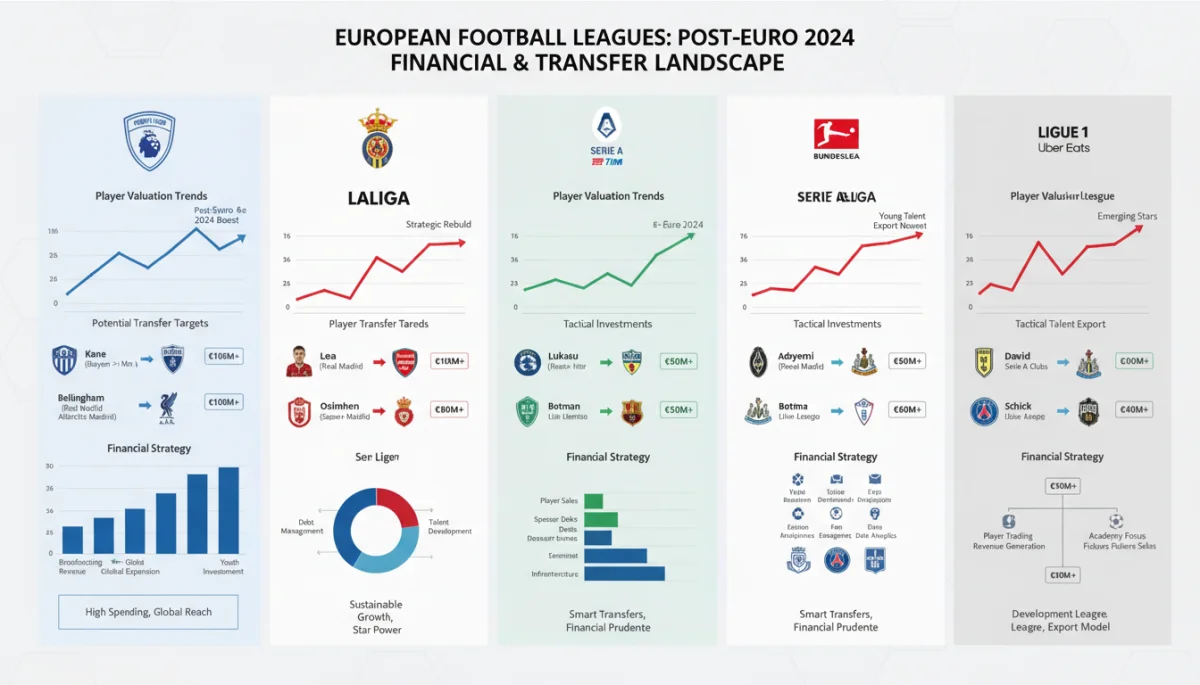
Furthermore, the focus on developing players within their own systems means that La Liga clubs are often selling clubs, generating significant revenue from the sale of their academy graduates. This sustainable model ensures a continuous cycle of talent production and financial health.
Serie A’s Tactical Adaptations and Revitalization
Italian Serie A clubs are undergoing a period of revitalization, focusing on tactical innovation and a blend of experienced leadership with emerging talent. For the 2026 transfer window, their strategies will likely involve carefully selected acquisitions to fit specific tactical systems, often favoring players with a strong understanding of positional play.
Serie A teams have historically been known for their defensive solidity, but modern Italian football embraces more fluid and attacking styles. This shift influences their transfer targets, looking for players who can contribute both defensively and offensively.
Targeting Versatile Midfielders and Defenders
The tactical demands of Serie A often lead clubs to prioritize versatile midfielders who can dictate play, win possession, and contribute to attacks. Defenders who are comfortable on the ball and can initiate attacks from the back are also highly sought after.
- Emphasis on tactical fit over individual star power.
- Seeking experienced players for leadership roles.
- Investing in young talent with high potential.
- Leveraging loan markets for squad depth.
Financial constraints continue to be a factor for many Italian clubs, pushing them to be creative in the transfer market. Free agents, loan deals with options to buy, and player swaps are common strategies used to strengthen squads without breaking the bank.
The competitive nature of Serie A means that every signing is scrutinized for its potential impact on the team’s balance and performance. Clubs often conduct extensive background checks to ensure new players can seamlessly integrate into the team culture and tactical framework.
Bundesliga’s Youth Development and Market Efficiency
Germany’s Bundesliga is widely recognized for its exceptional youth development programs and efficient transfer market operations. For the 2026 transfer window, Bundesliga clubs will continue to prioritize acquiring young, high-potential players, developing them, and often selling them on for significant profit.
This model of ‘buy low, sell high’ has proven highly successful for many German clubs, allowing them to remain competitive both domestically and in European competitions despite not always having the same financial resources as their Premier League counterparts.
Scouting for Future Stars
Bundesliga clubs have robust scouting networks focused on identifying talent from around the world, particularly in regions known for producing technically gifted young players. Their academies are also among the best globally, providing a constant pipeline of talent.
- Strong emphasis on player development pathways.
- Strategic investments in promising talents.
- Efficient use of transfer fees to reinvest in the squad.
- Building sustainable long-term club models.
The league’s focus on attacking football and player progression makes it an attractive destination for young players looking to make their mark. This reputation helps clubs to secure top youth prospects even when facing competition from wealthier leagues.
Furthermore, the Bundesliga’s fan culture and well-run clubs create a stable environment for player growth. This stability, combined with excellent coaching and modern facilities, allows young players to flourish and reach their full potential, ultimately increasing their market value.
Ligue 1’s Talent Factory and Strategic Sales
France’s Ligue 1 has firmly established itself as a premier talent factory, consistently producing some of the world’s most exciting young players. For the 2026 transfer window, Ligue 1 clubs, with the exception of Paris Saint-Germain, will likely continue their strategy of developing promising talents and strategically selling them to generate revenue.
This ecosystem allows smaller clubs to remain financially viable by nurturing talent, while PSG operates on a different scale, often targeting established global superstars to bolster their squad and brand.
Balancing Development and Financial Returns
The challenge for most Ligue 1 clubs is to balance the need to develop players for their own sporting ambitions with the reality of generating income through sales. This often means making difficult decisions about when to sell a rising star.
- Focus on identifying and developing young prospects.
- Strategic player sales to fund club operations.
- Leveraging youth academies as primary talent sources.
- Adapting to market demands for specific player profiles.
The league’s reputation as a stepping stone to bigger clubs can sometimes be a double-edged sword, as it can be challenging to retain top talent for extended periods. However, it also attracts young players who see a clear path to professional football and international recognition.
PSG, on the other hand, operates more like a Premier League or La Liga giant, investing heavily in high-profile players to compete for the Champions League. Their transfers significantly impact the overall dynamics of the Ligue 1 transfer market, often driving up prices for other clubs.
Navigating the Financial Fair Play and Regulations
Beyond player valuations and league-specific strategies, the 2026 transfer window will also be heavily influenced by evolving Financial Fair Play (FFP) regulations. UEFA’s updated rules, focusing on squad cost controls and solvency, will compel clubs to be even more diligent in their financial planning and transfer dealings.
Clubs across all five major leagues are now under increased scrutiny regarding their spending. This means a greater emphasis on generating revenue, managing wage bills, and making shrewd investments rather than simply spending big.
Impact of New UEFA Regulations
The new FFP rules aim to promote greater financial sustainability and competitive balance within European football. Clubs must demonstrate their ability to cover expenses with their own revenues, limiting reliance on owner funding.
- Stricter monitoring of club expenditures.
- Limits on squad costs relative to revenue.
- Increased focus on club solvency and liquidity.
- Penalties for non-compliance, including transfer bans.
This regulatory environment encourages clubs to invest in their academies, develop their own talent, and explore innovative commercial strategies to boost income. The days of unlimited spending without consequence are increasingly becoming a relic of the past.
Clubs are also exploring multi-club ownership models and strategic partnerships to navigate FFP, sharing resources and talent across different leagues. This complex interplay of sporting ambition, financial realities, and regulatory oversight will define the 2026 transfer window.
| Key Aspect | Description |
|---|---|
| Post-Euro 2024 Valuations | Tournament performances significantly alter player market values, creating dynamic opportunities. |
| Premier League Strategy | Aggressive pursuit of top talent, data-driven recruitment, and high spending capacity. |
| Bundesliga Approach | Focus on youth development, efficient market operations, and ‘buy low, sell high’ model. |
| FFP Regulations | Stricter UEFA rules enforce financial sustainability, impacting transfer budgets and strategies. |
Frequently Asked Questions About the 2026 Transfer Window
Euro 2024 performances are crucial. Exceptional displays can significantly inflate a player’s market value, attracting higher bids, while underperformance might lead to a decrease. Clubs will have analyzed these impacts for strategic acquisitions.
Premier League clubs are expected to maintain aggressive spending, utilizing data analytics and extensive scouting to secure top-tier talent. They prioritize players who can immediately adapt to the league’s intense demands and contribute to competitive success.
La Liga teams will focus on technical prowess and youth development. They often seek undervalued talents from South America and Europe, integrating them into their systems while balancing financial prudence with ambitious sporting goals.
UEFA’s updated FFP rules are critical, enforcing stricter squad cost controls and solvency requirements. Clubs must demonstrate financial sustainability, influencing transfer budgets, wage structures, and overall market activity to avoid penalties.
The Bundesliga and Ligue 1 are traditionally strong in youth development. Their robust scouting networks and clear pathways for young players make them ideal platforms for identifying, nurturing, and eventually capitalizing on emerging talents in the 2026 market.
Conclusion
The 2026 transfer window represents a fascinating intersection of sporting ambition, financial strategy, and regulatory compliance for Europe’s five major football leagues. The ripple effects of Euro 2024 on player valuations, coupled with evolving Financial Fair Play rules, demand an unprecedented level of foresight and adaptability from clubs. Whether through aggressive spending, astute youth development, or tactical acquisitions, each league is charting its unique course to navigate this complex landscape, ultimately shaping the future of European football.
