Tactical Foul Mastery: How Top Teams Reduce Opponent Chances by 10%
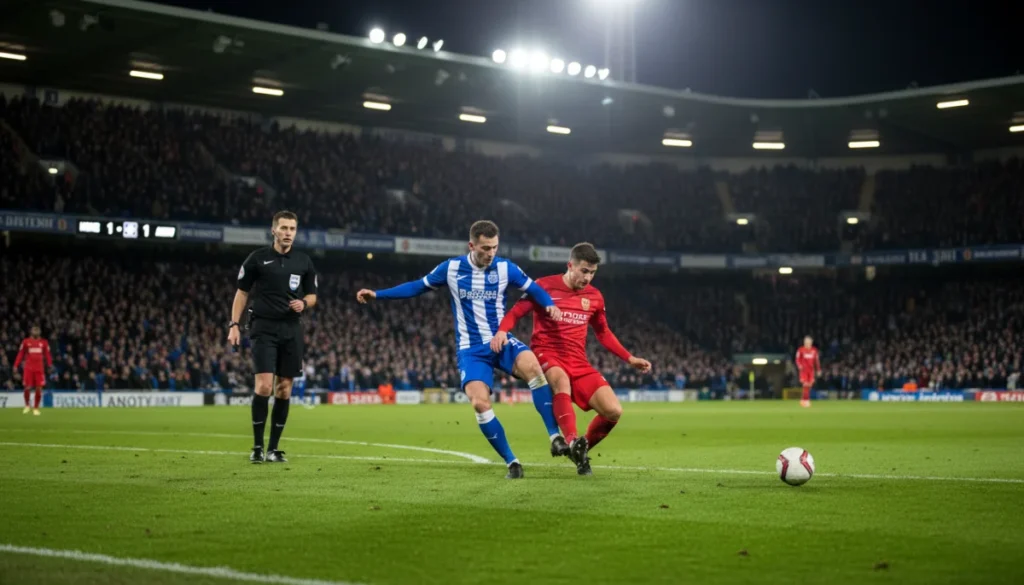
Elite football teams leverage the tactical foul as a sophisticated defensive tool, strategically disrupting opposition momentum and reducing scoring opportunities by an average of 10% through calculated interventions.
In modern football, the art of the tactical foul strategy has evolved into a sophisticated defensive mechanism, often the unseen force dictating the ebb and flow of high-stakes matches. This nuanced approach involves deliberately committing minor infractions to break up dangerous plays, reset defensive formations, and ultimately, significantly reduce an opponent’s chances of scoring. Understanding this intricate aspect of the game reveals a deeper layer of strategic genius that often goes unnoticed by the casual observer, yet is meticulously planned and executed by top-tier teams.
The subtle science of defensive disruption
The tactical foul is far more than just a simple trip or pull of the shirt. It’s a calculated decision, a moment of controlled aggression designed to achieve a specific strategic objective without incurring severe punishment. This involves understanding the game’s rhythm, anticipating opponent movements, and knowing precisely when and where to intervene.
At its core, the science of defensive disruption through tactical fouling is about managing risk and reward. A well-executed tactical foul can prevent a clear goal-scoring opportunity, allow the defense to regroup, and even frustrate the opposition. Conversely, a poorly timed or overly aggressive foul can lead to a yellow card, a dangerous set-piece, or even a red card, jeopardizing the team’s chances.
Understanding the intent behind the foul
It’s crucial to differentiate between a clumsy challenge and a deliberate tactical foul. The latter is characterized by its intention to halt an attack, often in transitional moments, rather than winning the ball. This requires players with exceptional game intelligence and discipline.
- Halting counter-attacks: Disrupting fast breaks before they gain momentum.
- Resetting defensive shape: Allowing teammates to get back into position.
- Frustrating opponents: Breaking their rhythm and confidence.
- Controlling tempo: Slowing down the game when necessary.
The strategic deployment of tactical fouls is a testament to a team’s collective understanding of defensive principles. It’s not about individual acts of malice, but rather a coordinated effort to protect the goal and maintain structural integrity. This requires constant communication and an almost telepathic understanding among players.
Team 1: Atlético Madrid’s masterclass in dark arts
Diego Simeone’s Atlético Madrid has long been synonymous with defensive solidity and a pragmatic approach to the game, where the tactical foul is a finely honed weapon. Their mastery lies in their collective discipline and their ability to execute these fouls in areas that minimize danger while maximizing disruption.
Atlético’s players are renowned for their willingness to make the ‘professional foul’ when an opponent threatens to break through. This isn’t just about individual brilliance; it’s a systemic approach ingrained in their training and philosophy. They often commit fouls in the midfield or wide areas, preventing opponents from reaching the final third with pace and momentum.
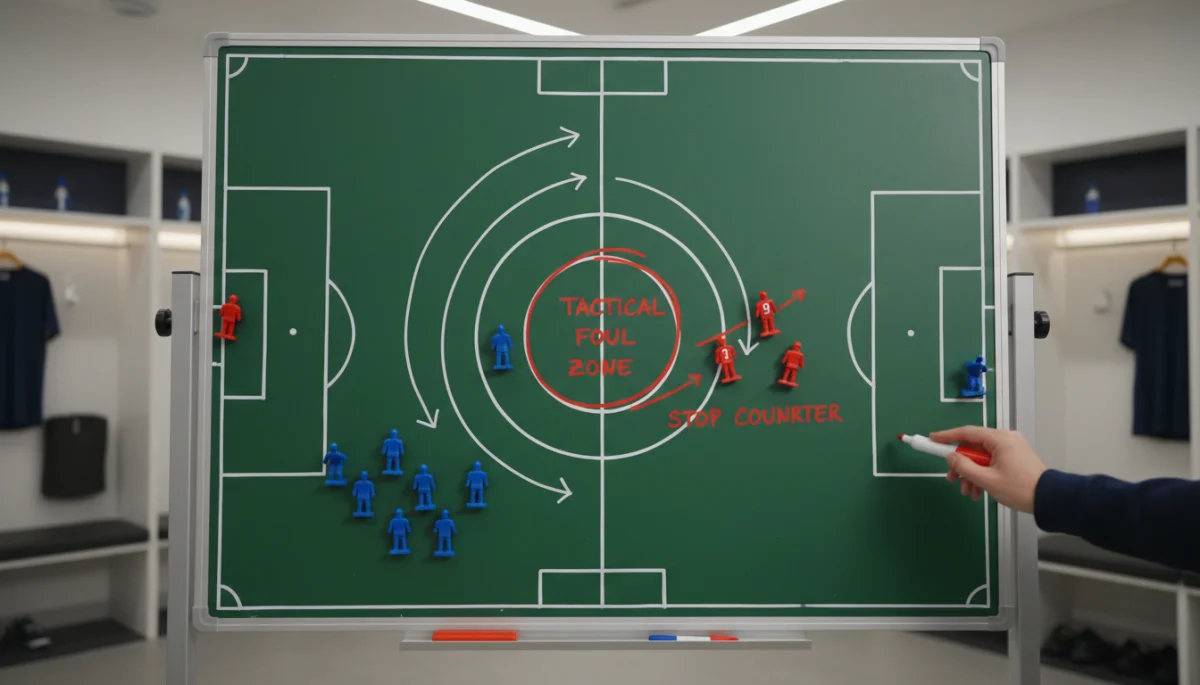
Their defensive setup is designed to funnel opponents into specific zones where these fouls can be most effectively applied. This reduces the risk of conceding free-kicks in dangerous positions and ensures that any resulting set-piece is taken from an area where Atlético’s robust defense can deal with it.
Key elements of Atlético’s approach
- Collective pressing: Forcing opponents into tight spaces.
- Positional intelligence: Players know exactly where and when to foul.
- Minimal impact: Aiming for fouls that result in yellow cards, not red.
- Psychological warfare: Frustrating opponents through constant disruption.
The effectiveness of Atlético’s tactical foul strategy is evident in their consistent ability to concede fewer goals than their rivals, even against more offensively gifted teams. Their approach isn’t always pretty, but it is undeniably effective, contributing significantly to their defensive prowess and title challenges.
Team 2: Italy’s national team and the Catenaccio legacy
The Italian national team, particularly in their historic triumphs, has often showcased the tactical foul as a cornerstone of their defensive philosophy, a modern interpretation of the legendary Catenaccio system. While not as overtly aggressive as some club teams, their use of the tactical foul is characterized by its intelligence and timing.
Italian defenders and midfielders are masters of the ‘small foul’ – the shirt tug, the subtle block, the mistimed tackle that doesn’t draw a card but effectively breaks up play. This is often seen when an opponent is gaining speed in transition or looking to combine in dangerous areas. The objective is to prevent the opponent from reaching full stride, forcing them to restart their attack from a static position.
Their strategy is deeply rooted in preventing numerical superiority for the opposition in attacking phases. By committing a foul, even if it results in a free-kick, it grants the Italian defense crucial seconds to reorganize and ensure they are not caught out of position. This meticulous attention to defensive shape and control is a hallmark of their tactical identity.
Hallmarks of Italy’s defensive intelligence
- Anticipation: Reading the game to intercept or disrupt before danger escalates.
- Positional discipline: Maintaining defensive lines even when fouling.
- Controlled aggression: Applying pressure without overcommitting.
- Game management: Using fouls to dictate the pace and flow of the match.
The Italian approach to tactical fouling is less about brute force and more about surgical precision, reflecting a deep understanding of defensive principles and the psychological impact of constant disruption on an opponent’s attacking rhythm.
Team 3: Chelsea under Mourinho’s pragmatic reign
During José Mourinho’s various spells at Chelsea, particularly his first, the team became a formidable defensive unit that expertly utilized the tactical foul. Mourinho’s philosophy prioritized solidity and control, and the tactical foul was a key instrument in achieving these objectives.
Chelsea’s midfielders, such as Claude Makelele and later Nemanja Matic, were exemplary in their roles, often committing fouls in the midfield to protect the back four. These fouls were rarely malicious; instead, they were perfectly timed interventions designed to prevent opponents from building momentum through the central areas. This strategy was particularly effective against teams that relied on quick passing and intricate attacking movements.
The objective was to make it incredibly difficult for opponents to play through the lines, forcing them into wider, less dangerous areas, or simply compelling them to restart their attacks. This constant disruption had a significant psychological effect, often leading to frustration and desperation from the opposition.
Mourinho’s tactical foul principles at Chelsea
- Midfield screening: Protecting the defense with strategic fouls.
- Breaking rhythm: Preventing fluid attacking patterns.
- Defensive compactness: Ensuring the team remained tight and organized.
- Exploiting referee leniency: Understanding how much they could get away with.
Chelsea’s success under Mourinho, built on a foundation of defensive resilience and calculated disruption, highlighted how a well-drilled team could use the tactical foul to control games and grind out results, even against more flamboyant opponents.
The impact on opponent chances and overall game flow
The strategic implementation of tactical fouls has a profound impact on a team’s ability to reduce opponent scoring chances. By consistently breaking up play in non-threatening areas, teams prevent opponents from entering the penalty box, taking shots, or even launching dangerous crosses. This proactive defensive measure can demonstrably reduce the number of quality opportunities an opponent creates.
Studies and statistical analyses often show a direct correlation between effective tactical fouling and a decrease in expected goals (xG) for the opposition. When an attack is consistently halted before it can reach its dangerous phase, the likelihood of a goal drastically diminishes. This isn’t just about preventing one chance; it’s about systematically dismantling an opponent’s attacking rhythm and confidence over 90 minutes.
Furthermore, tactical fouls influence the overall game flow. They can slow down a fast-paced game, allowing a team to catch its breath, reorganize, or simply waste time when holding a lead. This aspect of game management is crucial in high-pressure situations, enabling teams to exert control even when under intense offensive pressure.
Evolving tactics and the future of the tactical foul
As football continues to evolve, so too does the art of the tactical foul. Referees are becoming more adept at identifying and penalizing cynical fouls, leading to an increased emphasis on subtlety and intelligence. Teams must adapt their strategies to avoid unnecessary bookings while still achieving the desired disruptive effect.
The future of the tactical foul will likely see an even greater reliance on collective understanding and less on individual ‘heroic’ fouls. Data analytics will play a larger role in identifying optimal fouling zones and patterns, helping teams to refine their defensive strategies. The goal remains the same: to break up play effectively without inviting severe consequences.
Coaches are constantly experimenting with new ways to maintain defensive solidity, and the tactical foul will undoubtedly remain a crucial component of this. It’s a testament to the game’s complexity that such a seemingly negative action can be transformed into a powerful strategic asset, shaping outcomes and influencing championships.
| Key Aspect | Description |
|---|---|
| Strategic Disruption | Intentional fouls to break opponent momentum and re-establish defensive shape. |
| Reduced Chances | Effectively lowers opponent’s goal-scoring opportunities by preventing dangerous attacks. |
| Team Discipline | Requires collective understanding and precise execution to avoid severe penalties. |
| Game Management | Influences match tempo and allows teams to control the flow and dynamics of play. |
Frequently asked questions about tactical fouling
A tactical foul is a deliberate, minor infraction committed to prevent an opponent from gaining a significant advantage, such as launching a dangerous counter-attack or entering a threatening area. It’s about disrupting play strategically rather than winning the ball, often occurring in midfield to allow defensive regrouping.
By breaking up play before it reaches critical areas, tactical fouls prevent opponents from building momentum, creating clear-cut chances, or entering the penalty box. This forces them to restart attacks from less dangerous positions, significantly lowering the quality and quantity of their scoring opportunities.
Teams like Atlético Madrid, under Diego Simeone, and past Italian national teams have historically excelled at this. Chelsea, during José Mourinho’s tenures, also famously employed this strategy. Their success stems from collective discipline, game intelligence, and precise execution in critical moments.
The primary risks include receiving yellow or red cards, conceding dangerous free-kicks, or even penalties if committed inside the box. Teams must balance the strategic benefits against these potential punishments, requiring careful judgment and disciplined players to execute effectively.
Referees are increasingly vigilant in identifying and penalizing cynical tactical fouls, especially those that deny clear goal-scoring opportunities. This has pushed teams to be more subtle and intelligent in their approach, focusing on fouls in less dangerous areas to avoid severe sanctions and maintain numerical advantage.
Conclusion
The tactical foul, far from being a mere act of aggression, stands as a sophisticated and integral component of modern football strategy. As evidenced by the meticulous approaches of teams like Atlético Madrid, the Italian national team, and Mourinho’s Chelsea, its mastery can profoundly influence match outcomes by disrupting opponent rhythm and significantly curtailing scoring opportunities. This nuanced defensive art underscores the intricate balance between aggression and discipline, proving that sometimes, the most effective defense involves knowing precisely when to stop play rather than win the ball, ultimately shaping the beautiful game’s strategic landscape.
