3-5-2 Formation: Rapid Adaptation for 2026 Success

The 3-5-2 formation is rapidly gaining traction in modern football due to its tactical flexibility, offering teams a potent blend of defensive solidity and attacking prowess, crucial for success by 2026.
In the dynamic world of football, tactical evolution is constant. The ability to adapt and innovate often dictates success. Today, we delve into a system that is experiencing a significant resurgence: the 3-5-2 formation adaptation. This article will explore why this formation is becoming a cornerstone for many elite teams and how your squad can implement it effectively within a tight four-week timeframe, aiming for competitive advantage by 2026.
The Resurgence of the 3-5-2: A Modern Tactical Blueprint
The 3-5-2 formation, once considered a relic of a bygone era, has made a remarkable comeback in contemporary football. Its renewed popularity stems from its inherent flexibility, allowing teams to seamlessly transition between defensive solidity and attacking fluidity. This tactical versatility addresses many of the challenges posed by modern opposition, particularly those employing high pressing or narrow attacking structures.
At its core, the 3-5-2 offers a robust defensive block with three central defenders, providing numerical superiority against most two-striker systems. The five-man midfield, featuring two wing-backs, three central midfielders, and two forwards, creates a dynamic diamond or flat structure that can dominate central areas while providing width in attack. This balance makes it an attractive option for coaches seeking both control and penetration.
Key Attributes Driving its Popularity
- Defensive Stability: The three central defenders provide a strong base, making it difficult for opponents to break through centrally.
- Midfield Dominance: Five midfielders allow for superior possession retention and control of the middle of the park.
- Attacking Versatility: Two strikers offer varied attacking options, while wing-backs provide natural width and overload opportunities.
- Transitional Speed: The structure facilitates quick transitions from defense to attack, exploiting spaces left by opponents.
Teams like Inter Milan, Atalanta, and various national teams have successfully utilized the 3-5-2, demonstrating its effectiveness at the highest levels. Their success showcases how a well-drilled 3-5-2 can stifle opponents while creating numerous scoring opportunities, making it a compelling choice for any ambitious team looking to compete in 2026.
Understanding the Core Principles and Player Roles
To effectively implement the 3-5-2, a deep understanding of its core principles and the specific responsibilities of each player is paramount. This formation is not simply about positioning; it demands intelligent movement, precise communication, and a strong collective understanding of tactical objectives. Each role is interconnected, and a breakdown in one area can compromise the entire system.
The three central defenders, often referred to as a back three, require strong individual defensive capabilities, excellent positional sense, and comfort in playing out from the back. The central defender in the middle acts as a libero, covering his two wider counterparts and initiating attacks. The wing-backs are arguably the most demanding roles, needing exceptional stamina, defensive diligence, and attacking flair to provide both width and defensive cover.
Essential Player Profiles
- Central Defenders: Strong tacklers, good in the air, excellent passers, and comfortable stepping into midfield.
- Wing-backs: High work rate, strong defensive awareness, pace, good crossing ability, and stamina for box-to-box movement.
- Central Midfielders: A mix of defensive anchor, box-to-box dynamism, and creative playmaking.
- Forwards: Diverse skill sets, including target man, poacher, and link-up play, with strong finishing ability.
The central midfield trio typically consists of a holding midfielder, who screens the defense, and two advanced midfielders, who support the attack and press opponents. The two strikers work in tandem, often with one dropping deep to link play and the other making runs in behind the defense. Understanding these nuanced roles is the first step towards successful implementation.
Phase 1: Week 1 – Establishing Defensive Foundations
The initial week of adapting to the 3-5-2 formation must focus on building a solid defensive structure. Without a robust defense, the attacking potential of the system will be undermined. This phase is about instilling confidence in the back three and defining the defensive responsibilities of the wing-backs and central midfielders.
Training sessions should heavily emphasize positional play, marking, and pressing triggers within the defensive third. Small-sided games can be modified to simulate defensive scenarios, forcing players to communicate and cover for each other. The focus should be on creating a compact defensive shape that is difficult for opponents to penetrate, particularly through the central channels.
Key Training Drills for Week 1
- 3v2/3v3 Defensive Drills: Focus on central defenders’ communication, covering, and tackling.
- Wing-back Defensive Responsibilities: Drills to practice tracking wide players and forming a back five when defending.
- Midfield Pressing Triggers: Exercises to teach central midfielders when and how to press, forcing turnovers.
It is crucial to repeatedly drill the defensive movements and transitions. Players need to instinctively understand when to drop, when to step up, and how to maintain defensive lines. Video analysis of successful 3-5-2 teams can also provide valuable insights, showing players how their roles contribute to the overall defensive solidity. By the end of week one, the team should have a clear understanding of their defensive shape and responsibilities.
Phase 2: Week 2 – Integrating Midfield Dynamics and Transitions
With a solid defensive foundation established, week two shifts focus to the midfield, the engine room of the 3-5-2 formation. This phase is about developing the intricate relationships between the three central midfielders and their synergy with the wing-backs and forwards, particularly during transitions between defense and attack.
Training should now incorporate larger-sided games, emphasizing ball retention, quick passing combinations, and swift transitions. The central midfielders need to learn how to dictate the tempo of the game, switch play effectively, and support both the defensive and offensive phases. The wing-backs’ roles become even more critical here, as they are the primary source of width in attack and crucial in tracking back defensively.
Developing Midfield Cohesion
Drills should focus on diamond or triangle passing patterns within the midfield, promoting quick one-touch and two-touch play. Emphasis on movement off the ball is essential to create passing lanes and disorganize opposing defenses. The holding midfielder’s role in screening the defense and distributing the ball will be a key focus, as will the advanced midfielders’ ability to join the attack and recover defensively.
Simulating game scenarios where the team wins possession and immediately looks to exploit space through quick passes or direct balls to the forwards will be invaluable. This trains the midfielders to think proactively and react swiftly to changes in possession. Communication among the midfield trio and with the wing-backs will be constantly reinforced to ensure seamless transitions.
By the end of this phase, the midfield unit should demonstrate improved understanding of their roles in possession, out of possession, and during rapid transitions, preparing them for more complex attacking patterns.
Phase 3: Week 3 – Unleashing Attacking Potential and Set Pieces
Week three is dedicated to honing the offensive aspects of the 3-5-2 formation. Having established defensive and midfield structures, the focus now shifts to maximizing the impact of the two strikers and the attacking contributions of the wing-backs and advanced midfielders. This phase is about creating goal-scoring opportunities through varied attacking movements and set-piece strategies.
Training sessions will involve attacking drills that encourage creative link-up play between the two forwards, exploiting channels, and combining with overlapping wing-backs. The advanced central midfielders will practice making late runs into the box and supporting the strikers. The objective is to develop diverse attacking patterns that can break down different types of opposition defenses.
Attacking Drills and Set-Piece Specialization
- Striker Partnerships: Drills focusing on one-twos, flick-ons, and making runs for each other.
- Wing-back Overlaps: Exercises combining wing-backs with advanced midfielders and forwards to create wide overloads and crossing opportunities.
- Set-Piece Routines: Designing and practicing specific routines for corners and free-kicks, utilizing the height of the central defenders and the movement of the forwards.
Furthermore, simulating game-like attacking scenarios against a structured defense will help players understand how to create space and exploit weaknesses. Emphasis will be placed on quick decision-making in the final third and effective finishing. Set pieces, often overlooked, can be a significant source of goals in the 3-5-2, so dedicated time will be spent on perfecting delivery and attacking runs. By the end of week three, the team should exhibit a clear and effective attacking identity.
Phase 4: Week 4 – Refinement, Adaptation, and Game Simulation
The final week of the implementation plan is about consolidating all the learned elements and preparing the team for competitive matches. This phase focuses on refining tactical nuances, adapting to different opponent scenarios, and conducting full-scale game simulations to build cohesion and confidence.
Training will involve full-pitch eleven-a-side drills, where the team plays against various simulated opponent formations and styles. This allows the coaching staff to identify any remaining weaknesses and make necessary adjustments. The emphasis will be on seamless transitions, effective communication across all lines, and consistent application of the 3-5-2 principles under pressure.
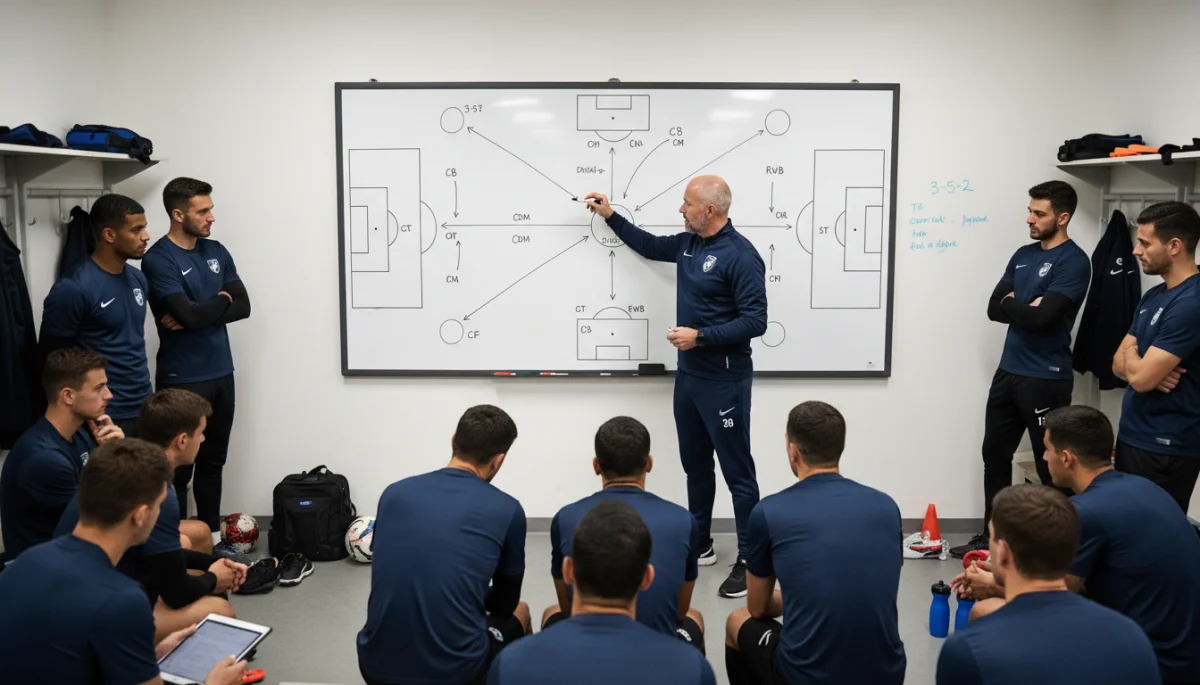
Tactical Refinement and Mental Preparation
Video analysis of the team’s own training sessions will be crucial, providing immediate feedback and opportunities for collective learning. Individual player feedback sessions will address specific areas for improvement. Coaches will work on fine-tuning the team’s pressing schemes, defensive shape against different attacks, and offensive patterns of play.
Mental preparation is also key in this final week. Players need to be confident in the system and their roles within it. Team meetings to discuss tactical plans, opponent analysis, and motivational talks will help build a strong collective mindset. By the culmination of week four, the team should be tactically proficient, physically prepared, and mentally ready to deploy the 3-5-2 formation effectively in competitive scenarios, setting the stage for success in 2026.
Challenges and Overcoming Obstacles in 3-5-2 Implementation
Implementing a new tactical system like the 3-5-2 is not without its challenges. Coaches and players must be prepared to face and overcome several obstacles to ensure a smooth transition and successful adaptation. Understanding these potential pitfalls beforehand can help in developing proactive strategies to mitigate their impact.
One of the primary challenges is the demanding nature of the wing-back role. These players need exceptional stamina, defensive discipline, and attacking prowess. Finding or developing players with this unique skill set can be difficult. Additionally, the back three needs to develop strong communication and understanding to avoid defensive vulnerabilities, especially against teams with quick attackers.
Common Obstacles and Solutions
- Wing-back Fatigue: Implement specific fitness regimes and rotation policies. Consider tactical adjustments during matches to conserve energy.
- Defensive Gaps: Continuous drills on positional awareness, communication, and covering. Emphasize the holding midfielder’s role in screening the defense.
- Lack of Attacking Width: Ensure wing-backs are consistently involved in attacking phases. Encourage central midfielders to drift wide or make overlapping runs when appropriate.
- Player Buy-in: Clearly communicate the benefits of the system and involve players in tactical discussions. Highlight successful examples of the 3-5-2 in action.
Another obstacle can be player resistance or discomfort with new roles. Some players might struggle to adapt to the increased defensive responsibilities of a forward or the expansive duties of a wing-back. Coaches must be patient, provide individual coaching, and emphasize the collective benefits of the system. Regular feedback and positive reinforcement are crucial to building confidence and ensuring full team buy-in. Overcoming these challenges requires dedication, flexible coaching, and a strong team spirit, all contributing to a more resilient and adaptable squad.
| Key Aspect | Brief Description |
|---|---|
| Defensive Solidity | Three central defenders provide a strong backline, reducing central penetration. |
| Midfield Control | Five midfielders dominate possession and dictate game tempo, offering tactical flexibility. |
| Attacking Versatility | Two strikers and overlapping wing-backs create diverse goal-scoring opportunities. |
| Rapid Implementation | A structured four-week plan enables quick and effective adoption of the system. |
Frequently Asked Questions About the 3-5-2 Formation
The 3-5-2 formation offers a unique blend of defensive strength and attacking flexibility. It allows teams to control the midfield, create overloads in wide areas through wing-backs, and provide two central attacking threats, making it versatile against various opponent formations and tactics.
The wing-back roles are arguably the most demanding. They require exceptional stamina, defensive discipline to track opponents, and attacking prowess to provide width and deliver crosses. They essentially cover the entire flank, contributing to both defense and attack.
While full mastery takes time, a structured four-week plan can effectively establish the core defensive and offensive principles. This rapid implementation focuses on foundational drills, positional understanding, and tactical transitions, allowing a team to become competitive with the system.
A back three provides numerical superiority against one or two strikers, allowing central defenders to cover each other effectively. It also creates a strong central block, making it difficult for opponents to penetrate through the middle and often forcing them wide.
With two central strikers, the formation offers multiple attacking threats and link-up opportunities. Wing-backs provide natural width, delivering crosses and stretching defenses, while advanced central midfielders can make late runs into the box, creating varied goal-scoring chances.
Conclusion
The 3-5-2 formation stands as a testament to football’s continuous tactical evolution, offering a compelling blend of defensive stability, midfield dominance, and attacking versatility. Its resurgence is not a fleeting trend but a strategic response to the demands of modern football. By diligently following a structured four-week implementation plan, focusing on establishing defensive foundations, integrating midfield dynamics, unleashing attacking potential, and refining adaptations, teams can effectively adopt this powerful system. The path to competitive success by 2026 is within reach for those willing to embrace the tactical demands and unlock the full potential of the 3-5-2 formation, transforming their play and challenging for top honors.
