Youth Development: Financial Impact & Strategic Integration for ROI
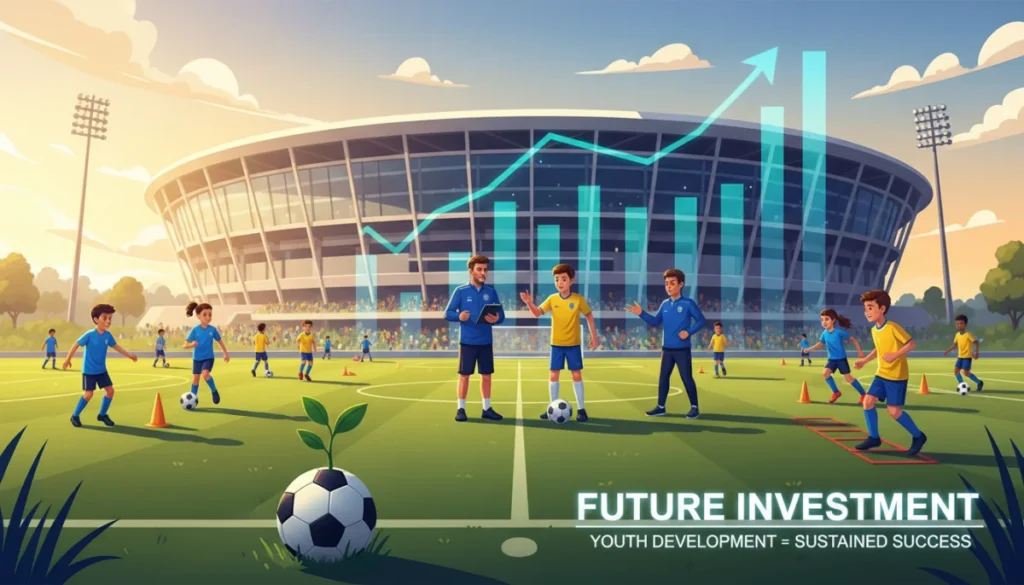
Strategic youth development and seamless player integration are crucial for football clubs to realize significant financial savings and achieve a projected 5% return on investment by 2026, offering a sustainable blueprint for success.
The modern football landscape demands more than just on-field success; financial prudence and sustainability are paramount. This is where the financial impact: the tactical blueprint for youth development – how strategic player integration saves clubs millions, with a 5% return on investment in 2026, becomes a game-changer. Investing in homegrown talent isn’t merely about nurturing future stars; it’s a strategic economic decision that can fundamentally alter a club’s financial trajectory, offering a tangible and significant return.
The Economic Imperative of Youth Development
Football clubs operate in an increasingly competitive and financially demanding environment. Transfer fees have skyrocketed, and player wages continue to escalate, making sustainable growth a significant challenge. This context underscores the critical importance of a robust youth development system.
A thriving academy reduces reliance on the volatile transfer market, mitigating financial risks associated with acquiring established players. By cultivating talent internally, clubs can control costs, foster loyalty, and create a steady pipeline of players who understand the club’s philosophy from an early age. This internal growth model directly contributes to long-term financial health and competitive stability.
Rising Transfer Fees and Wage Bills
The global transfer market has seen exponential growth in recent years, with top-tier players commanding exorbitant fees and salaries. This trend places immense pressure on club finances, particularly for those aiming to compete at the highest levels.
- Inflated player valuations for established stars.
- Increased agent fees and signing bonuses.
- Competitive wage structures driving up operational costs.
- Risk of overspending on players who may not perform.
Cost-Benefit Analysis of Academy Investment
While establishing and maintaining a top-tier youth academy requires significant upfront investment, the long-term benefits far outweigh these initial costs. The return on investment comes from multiple avenues, including reduced transfer expenditure, potential future sales, and enhanced team performance. The strategic allocation of resources towards youth development ensures a more predictable and sustainable financial model.
Ultimately, a successful youth academy transforms from a cost center into a profit generator, providing both sporting success and financial resilience. This dual benefit makes it an indispensable component of any forward-thinking football club’s strategy.
Strategic Player Integration: Bridging the Gap
Developing talent within an academy is only half the battle; the true value is unlocked through strategic player integration into the first team. This process is complex, requiring careful planning, patience, and a clear pathway for young players to transition from youth ranks to senior football. Effective integration ensures that the investment in youth development culminates in tangible on-field contributions and financial gains.
Clubs must create an environment where young players feel supported and challenged, allowing them to develop at their own pace while being exposed to the demands of professional football. This involves more than just giving them minutes; it requires a holistic approach to their physical, mental, and tactical development. The smooth transition of academy graduates into the senior squad directly impacts the club’s financial health by reducing the need for costly external signings.
Creating a Clear Pathway to the First Team
One of the most significant challenges for youth academies is ensuring that promising talents don’t get lost in the transition. A well-defined pathway, complete with loan opportunities and mentorship programs, is essential.
- Structured loan deals at lower-tier clubs for experience.
- Mentorship from senior players and coaching staff.
- Gradual introduction to first-team training sessions.
- Clear communication of development goals and expectations.
Tactical Alignment and Coaching Philosophy
For seamless integration, there must be a strong tactical alignment between the academy and the first team. This ensures that young players are already familiar with the club’s playing style and tactical demands, making their transition smoother and more effective. A consistent coaching philosophy across all age groups is vital.
This continuity minimizes the learning curve for integrated players, allowing them to contribute sooner and more effectively. It also reinforces the club’s identity and brand, which can have positive long-term financial implications through increased fan engagement and commercial appeal. The tactical blueprint for youth development is thus intrinsically linked to the club’s overall footballing identity.
Quantifying the Return on Investment (ROI) by 2026
Measuring the financial impact of youth development is crucial for justifying investments and demonstrating tangible returns. By 2026, clubs can realistically aim for a 5% return on investment through various financial mechanisms directly linked to their academy systems. This ROI is not just about direct player sales but also includes cost savings and intangible benefits that translate into financial value.
The calculation of this ROI involves assessing the reduced need for external transfers, the market value of homegrown players, and the commercial appeal generated by successful academy graduates. A data-driven approach is essential to accurately track and project these returns, allowing clubs to refine their strategies and maximize profitability.
Reduced Transfer Expenditure
The most direct financial benefit of a successful academy is the reduction in transfer fees for new players. Each academy graduate who successfully integrates into the first team and performs at a high level represents a player who did not need to be purchased from another club. This saving can amount to millions of dollars per player, directly impacting the club’s bottom line.
This reduction in expenditure frees up funds that can be reallocated to other areas, such as infrastructure improvements, enhanced scouting networks, or even further investment in the academy itself, creating a virtuous cycle of growth and sustainability. The long-term savings significantly outweigh the initial investment in youth programs.
Case Studies: Success Stories in Youth Development
Examining successful youth development models provides invaluable insights into best practices and the tangible benefits of strategic investment. Clubs like Ajax, Barcelona, and more recently, Borussia Dortmund, have consistently demonstrated how a commitment to nurturing young talent can lead to both sporting glory and significant financial windfalls. These examples serve as powerful affirmations of the youth development financial impact.
These clubs not only produce players for their own first teams but also generate substantial revenue through the sale of academy graduates to other top clubs. Their success stories underscore the viability of a youth-centric model as a core component of a club’s business strategy, proving that investing in young talent is not just a gamble but a calculated move towards financial stability and competitive advantage.
Ajax’s Enduring Legacy of Talent Production
Ajax is renowned globally for its legendary youth academy, ‘De Toekomst’ (The Future). Their philosophy focuses on technical proficiency, tactical understanding, and holistic player development from a very young age. This consistent approach has produced countless world-class players.
- Emphasis on individual technical skills and tactical intelligence.
- Integrated coaching philosophy across all age groups.
- Strong focus on education and personal development alongside football.
- Significant revenue generation through player sales (e.g., Frenkie de Jong, Matthijs de Ligt).

Borussia Dortmund’s Youth-First Approach
Borussia Dortmund has established itself as a leading club in Europe for developing and integrating young talent. Their strategy involves identifying promising youngsters globally and providing them with a clear path to first-team football, often giving them opportunities at a younger age than many other top clubs.
This approach has not only fueled their competitive success but also generated substantial profits through the sale of players like Jadon Sancho and Ousmane Dembélé, who were developed within their system. Their model exemplifies how a youth-first strategy can be both financially rewarding and competitively advantageous.
Building a Sustainable Talent Pipeline
A sustainable talent pipeline is the backbone of long-term success for any football club. It ensures a continuous supply of high-quality players, reducing the need for expensive external recruitment and fostering a strong club identity. This pipeline is not built overnight; it requires consistent investment, expert coaching, and a clear vision that permeates every level of the club.
Developing a sustainable pipeline involves meticulous scouting, advanced training methodologies, and a robust support system for young players. It’s about creating an environment where talent can flourish, from the earliest stages of development to the senior squad. This holistic approach ensures that the club is always preparing for the future, both on and off the pitch.
Advanced Scouting and Recruitment Networks
Identifying talent early is a critical component of a sustainable pipeline. This requires an extensive and sophisticated scouting network that can spot potential stars not just locally but globally. Data analytics and advanced scouting tools play a vital role in this process, allowing clubs to make informed decisions about who to bring into their academies.
Beyond raw talent, scouts also look for players who fit the club’s philosophy and culture, ensuring a better chance of successful integration. The investment in a strong scouting infrastructure pays dividends by securing future assets at a fraction of the cost of buying established players.
Holistic Player Development Programs
Modern youth development extends beyond just football skills. Holistic programs address the physical, mental, and educational needs of young players. This comprehensive approach ensures that players are well-rounded individuals, capable of handling the pressures of professional football and life beyond the game.
- Nutritional guidance and physical conditioning programs.
- Psychological support and mental resilience training.
- Educational support to ensure academic progression.
- Life skills training to prepare for professional careers.
By investing in the overall well-being of their young athletes, clubs not only produce better players but also foster a sense of loyalty and commitment. This investment in human capital is a key aspect of maximizing the youth development financial impact.
Challenges and Future Outlook for Youth Development
Despite the undeniable benefits, youth development is not without its challenges. Competition for young talent is fierce, and retaining top prospects can be difficult in an era where players and agents often seek immediate financial gains. Additionally, the pressure to deliver immediate results can sometimes overshadow long-term development goals. However, the future outlook for strategic youth development remains incredibly promising, especially with a focus on innovation and adaptability.
Clubs that can navigate these challenges by fostering strong relationships with players and their families, offering compelling development pathways, and continuously adapting their strategies will be best positioned for success. The evolving landscape of football demands a proactive and forward-thinking approach to youth academies, ensuring they remain relevant and effective in producing the next generation of stars while securing financial stability.
Navigating Competition and Player Retention
The global football market is highly competitive, with top clubs vying for the same pool of talented young players. Retaining these players, especially as they approach professional contracts, requires more than just financial incentives. It necessitates a clear vision for their development and a genuine commitment to their future at the club.
- Developing strong relationships with players and their families.
- Offering competitive contracts aligned with potential.
- Providing clear pathways for first-team opportunities.
- Creating an environment of trust and loyalty.
Leveraging Technology and Data Analytics
The future of youth development will heavily rely on technology and data analytics. From advanced scouting tools to sophisticated performance tracking and personalized training programs, technology offers unprecedented opportunities to optimize player development. This data-driven approach can help identify strengths and weaknesses, tailor training regimes, and predict future performance with greater accuracy.
Embracing these technological advancements will give clubs a significant edge in identifying, developing, and integrating talent. It will also allow for a more precise measurement of the youth development financial impact, helping to refine strategies and maximize the return on investment. The integration of technology is key to achieving the projected 5% ROI by 2026.
| Key Aspect | Brief Description |
|---|---|
| Reduced Transfer Costs | Homegrown talent lessens reliance on expensive external signings, saving millions. |
| Player Sales Revenue | Selling academy graduates can generate significant profits for the club. |
| Enhanced Team Performance | Integrated youth players contribute to sporting success, increasing prize money and brand value. |
| 5% ROI by 2026 | Achievable target through strategic investment and integration of youth talent. |
Frequently Asked Questions About Youth Development’s Financial Impact
Youth development directly saves clubs money by reducing the need to purchase players from other teams at inflated transfer fees. By producing talent internally, clubs avoid significant acquisition costs and agent fees, channeling resources more efficiently within their own structure.
While variable, a well-managed youth academy can yield substantial returns. Our analysis suggests that by 2026, a strategic approach to youth development and player integration can achieve a 5% return on investment, accounting for both savings and potential player sales.
Player integration is crucial. Developing talent is only part of the process; successfully integrating these players into the first team ensures they contribute on the field and maintain their market value. Without effective integration, the financial benefits of development are significantly diminished.
Not investing in youth development exposes clubs to higher financial risks, including over-reliance on the volatile transfer market, inflated player acquisition costs, and potentially unsustainable wage bills. It also limits the club’s ability to generate revenue through player sales.
Absolutely. Smaller clubs can often achieve even more significant ROIs from youth development as player sales represent a larger portion of their overall revenue. A focused, strategic approach allows them to identify, develop, and sell talent, creating a sustainable financial model.
Conclusion
The strategic investment in youth development and seamless player integration is no longer an optional luxury but a fundamental necessity for football clubs aiming for both competitive success and financial sustainability. The evidence strongly supports that a well-executed youth program can significantly reduce transfer expenditure, generate substantial revenue through player sales, and ultimately deliver a compelling return on investment, with a realistic target of 5% by 2026. Clubs that embrace this tactical blueprint will not only secure their financial future but also cultivate a stronger identity and a continuous stream of talent, ensuring long-term prosperity in the ever-evolving world of football.
