Decoding European Player Transfer Fees 2026: A $20M Guide

Decoding Transfer Fees: A Step-by-Step Guide to Understanding European Player Costs in 2026, Averaging $20 Million reveals the intricate financial ecosystem driving player movement across Europe’s top leagues.
The world of European football transfers is a financial labyrinth, often shrouded in mystery and speculation. In 2026, understanding Decoding Transfer Fees: A Step-by-Step Guide to Understanding European Player Costs in 2026, Averaging $20 Million has become more critical than ever, with player valuations reaching stratospheric levels. This guide aims to demystify the complex mechanisms behind these astronomical figures, offering clarity on how clubs arrive at these multi-million dollar agreements.
the evolving landscape of European player transfers
The European football transfer market has undergone significant evolution, transitioning from straightforward player sales to a sophisticated financial ecosystem. In 2026, the average transfer fee for a European player hovers around $20 million, a figure influenced by a myriad of interconnected factors. This section explores the overarching trends and shifts that define this high-stakes environment.
Gone are the days when a player’s raw talent was the sole determinant of their value. Today, clubs consider a comprehensive profile that includes not just on-pitch ability but also commercial appeal, marketability, and potential resale value. The increasing globalization of football and the influx of investment from various sources have further inflated prices, creating a competitive bidding landscape.
major market trends in 2026
- Youth Premium: Clubs are increasingly willing to pay a premium for young talents with high potential, viewing them as long-term investments.
- Data-Driven Scouting: Advanced analytics and scouting networks play a crucial role in identifying and valuing players, reducing subjective biases.
- Financial Fair Play (FFP) Influence: FFP regulations continue to shape club spending, forcing more strategic and often creative transfer dealings.
- Emergence of New Markets: Leagues outside the traditional ‘big five’ are gaining financial power, contributing to global competition for talent.
The strategic implications of these trends are profound. Clubs must balance immediate squad needs with long-term financial sustainability, making every transfer decision a calculated risk. The pressure to secure top talent while adhering to financial guidelines has led to innovative contract structures and payment plans, further complicating the transfer process.
In conclusion, the 2026 European player transfer landscape is characterized by high valuations, strategic investments in youth, and a data-driven approach. These elements combine to create a dynamic and often unpredictable market where understanding the underlying mechanics is paramount for any club aiming for success.
key factors influencing player valuation
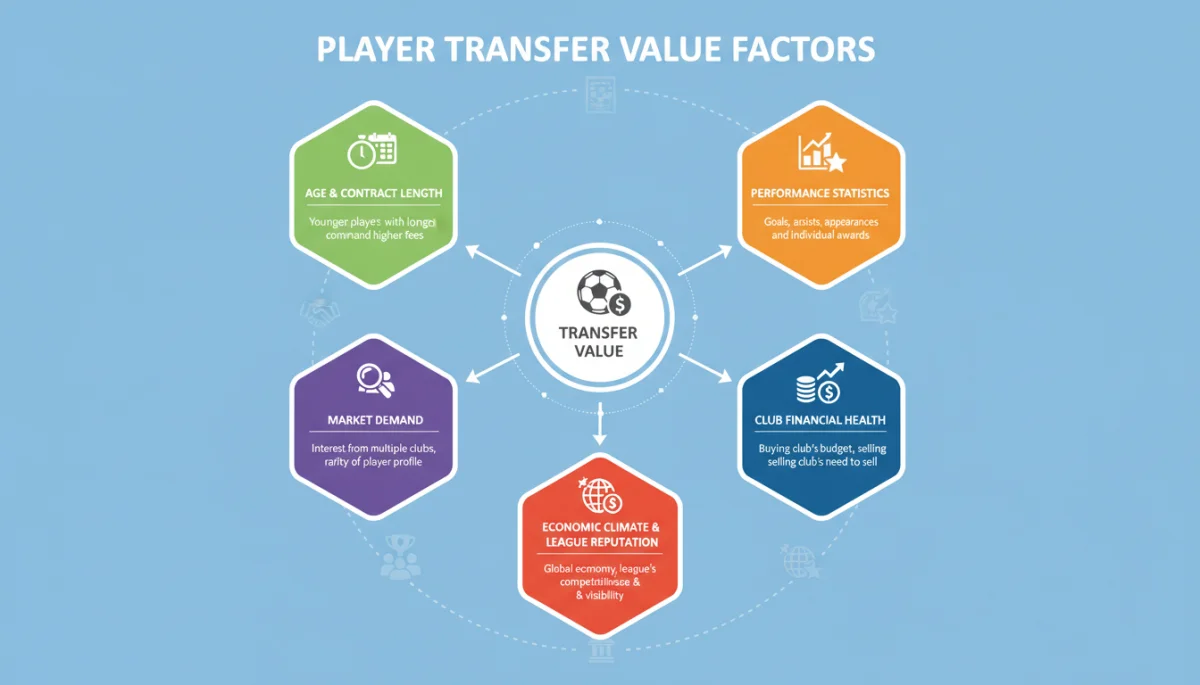
Determining a player’s market value is far from an exact science; it’s a complex interplay of objective metrics and subjective assessments. When Decoding Transfer Fees: A Step-by-Step Guide to Understanding European Player Costs in 2026, Averaging $20 Million, several critical factors consistently emerge as primary drivers of player valuation. These elements collectively shape the price tag a club is willing to pay.
At the core, a player’s performance on the field remains paramount. Goals scored, assists provided, defensive contributions, and overall impact on team success are all meticulously analyzed. However, performance alone doesn’t tell the whole story. The player’s age, particularly their potential for future development, significantly influences their perceived value, with younger players often commanding higher fees due to longer potential careers.
contract length and release clauses
The duration remaining on a player’s contract is a massive leverage point. A player with only a year or two left on their deal will typically command a lower fee than one with a four or five-year contract, as the selling club faces the risk of losing them for free. Release clauses, while less common in some leagues, set a predetermined price at which a player can be bought, often leading to inflated figures for highly sought-after talents.
- Remaining Contract Term: Shorter contracts reduce a player’s value due to impending free agency.
- Performance Metrics: Goals, assists, clean sheets, and advanced statistical contributions are crucial.
- Age and Potential: Younger players with high ceilings attract higher fees for future investment.
- Injury History: A history of significant injuries can decrease a player’s market value.
Beyond these individual player attributes, external factors like market demand, the financial health of both buying and selling clubs, and the player’s commercial appeal (e.g., social media following, endorsement potential) also play a significant role. A club desperate for a specific position might pay a premium, while a selling club under financial pressure might be forced to accept a lower offer.
In summary, player valuation is a multi-faceted process. It blends on-pitch performance, contractual situations, age, and broader market dynamics. Understanding these elements is essential for comprehending why some players command astronomical fees while others, seemingly talented, are valued lower.
the role of agents and intermediaries
Player agents and intermediaries are often the unsung, or sometimes controversial, architects behind European football transfers. Their influence in Decoding Transfer Fees: A Step-by-Step Guide to Understanding European Player Costs in 2026, Averaging $20 Million cannot be overstated. These figures act as crucial conduits between players and clubs, negotiating contracts, fees, and personal terms.
Agents primarily represent the player’s interests, aiming to secure the best possible deal in terms of salary, bonuses, and playing opportunities. However, their involvement extends to facilitating communication between clubs, often acting as initial points of contact and gauging interest. Their extensive networks and understanding of market dynamics are invaluable in a highly competitive environment.
negotiating commissions and fees
One of the most significant aspects of an agent’s role is their commission, which can be a percentage of the transfer fee, the player’s salary, or both. These commissions can add millions to the overall cost of a transfer, making them a significant component of the total expenditure. In 2026, regulations around agent fees are under constant scrutiny, with governing bodies attempting to introduce more transparency and control over these payments.
- Player Representation: Agents negotiate contracts, salaries, and playing time for their clients.
- Club Liaison: They facilitate initial contact and discussions between interested clubs.
- Market Insight: Agents possess deep knowledge of player values and club budgets.
- Commission Structure: Fees are typically a percentage of transfer value or player wages, impacting overall costs.
The relationship between agents, players, and clubs can be complex, sometimes leading to conflicts of interest. While agents are vital for navigating the intricate transfer landscape, their financial incentives mean they can also be a driving force behind inflated fees. Understanding their role is key to grasping the full financial picture of any major transfer.
In conclusion, agents and intermediaries are integral to the European transfer market. Their negotiation skills, market knowledge, and commission structures significantly influence the final transfer fees, making them a powerful force in shaping player movements and club finances.
financial fair play and its impact
Financial Fair Play (FFP) regulations, introduced by UEFA, have profoundly reshaped the financial strategies of European football clubs. When considering Decoding Transfer Fees: A Step-by-Step Guide to Understanding European Player Costs in 2026, Averaging $20 Million, FFP’s influence on spending limits and sustainability is a critical component. These rules aim to prevent clubs from spending more than they earn, fostering greater financial stability across the continent.
FFP mandates that clubs must balance their books over a three-year period, meaning expenditure on transfers and wages cannot significantly exceed income from broadcasting rights, sponsorships, ticket sales, and player sales. This has forced clubs to adopt more prudent financial management, moving away from relying solely on owner investment to cover operational losses.
strategic implications for transfers
The impact of FFP on transfer activity is multi-faceted. Clubs can no longer simply outspend rivals without consequence. Instead, they must strategize carefully, often prioritizing player sales to generate funds for new acquisitions. This has led to an increased focus on developing academy talent and securing profitable resale values for players.
- Sustainable Spending: FFP encourages clubs to spend within their means, linking expenditure to revenue.
- Player Sales Importance: Selling players becomes a vital revenue stream to fund new transfers and comply with regulations.
- Amortization of Fees: Clubs spread transfer costs over the length of a player’s contract to manage FFP calculations.
- Increased Loan Deals: Loan-to-buy options become more prevalent to defer and spread out significant financial commitments.
Moreover, FFP has encouraged innovative financial engineering, such as the amortization of transfer fees over long contracts, to spread the cost and reduce the immediate impact on a club’s financial statements. While controversial at times, FFP has undeniably brought a degree of financial discipline to a market that was previously characterized by unchecked spending.
Ultimately, FFP remains a significant external force shaping the European transfer market in 2026. It compels clubs to adopt more sustainable financial models, influencing everything from player recruitment strategies to long-term financial planning, and directly affecting how transfer fees are budgeted and executed.
the economic impact of top-tier players
Top-tier players are not merely athletes; they are significant economic assets for their clubs. Their presence has a profound impact beyond the pitch, influencing revenue streams and brand visibility. When Decoding Transfer Fees: A Step-by-Step Guide to Understanding European Player Costs in 2026, Averaging $20 Million, it’s crucial to consider the broader economic ripple effect these individuals create.
A star player can dramatically increase a club’s commercial appeal. Their global fanbase translates into higher shirt sales, increased merchandise revenue, and more lucrative sponsorship deals. They can also boost attendance figures, both at home matches and during international tours, generating additional income through ticket sales and hospitality packages.
brand value and media rights
The ‘star power’ of elite players significantly enhances a club’s brand value, making them more attractive to broadcasters and corporate partners. This, in turn, can lead to more substantial media rights deals, a primary source of income for many top European clubs. The ability of a player to generate media attention and social media engagement is a tangible asset that contributes to their overall transfer value.
- Increased Revenue: Top players boost shirt sales, merchandise, and sponsorship deals.
- Global Fanbase Expansion: They attract new fans internationally, growing the club’s reach.
- Enhanced Media Rights: Their presence makes clubs more appealing to broadcasters, securing better deals.
- Matchday Income: Star players can increase ticket sales and hospitality revenue.
Furthermore, a high-profile signing can elevate a club’s sporting ambitions, potentially leading to greater success in domestic and international competitions. Winning trophies not only brings prize money but also further enhances brand reputation and commercial opportunities, creating a virtuous cycle of investment and reward. The economic calculus behind acquiring a $20 million player often extends far beyond their on-field contributions alone.
In essence, top-tier players are financial magnets. Their ability to generate revenue, enhance brand value, and attract media attention contributes significantly to their high transfer fees, making them strategic investments rather than mere expenses for ambitious clubs in 2026.
future projections and market dynamics
Looking ahead, the European player transfer market is expected to continue its upward trajectory, albeit with potential shifts in dynamics. For those interested in Decoding Transfer Fees: A Step-by-Step Guide to Understanding European Player Costs in 2026, Averaging $20 Million, understanding these future projections is vital. The average $20 million fee is likely to be a baseline, with elite talents commanding even higher sums.
Several factors suggest a continued increase in transfer fees. The relentless pursuit of competitive advantage, coupled with the ever-growing global commercialization of football, will likely sustain demand for top-tier talent. New revenue streams, such as advanced digital content and immersive fan experiences, could further bolster club finances, allowing for greater spending capacity.
technological advancements and emerging markets
Technological advancements, particularly in data analytics and virtual scouting, will become even more sophisticated, allowing clubs to identify and evaluate talent more efficiently. This could lead to a more globalized scouting network, potentially unearthing gems from previously untapped regions and intensifying competition.
- Continued Price Inflation: Elite player fees will likely continue to rise due to demand and increased club revenues.
- Enhanced Data Analytics: Sophisticated data tools will refine player identification and valuation processes.
- New Investor Influx: More investment from non-traditional football markets could further inflate prices.
- Regulatory Evolution: FFP and agent regulations may adapt to market changes, impacting financial strategies.
However, potential headwinds exist. Economic uncertainties, evolving FFP regulations, and possible shifts in broadcasting revenues could introduce periods of moderation. The ongoing debate around agent commissions and potential salary caps could also influence future market behavior. The market will likely remain volatile, with rapid adjustments to economic and regulatory changes.
In conclusion, the future of European player transfers points towards continued growth in fees, driven by commercial expansion and technological innovation. While challenges and regulatory adjustments are inevitable, the fundamental appetite for elite talent will likely keep the average transfer fee for a European player around or above the $20 million mark in the years to come.
| Key Factor | Brief Description |
|---|---|
| Player Performance | On-field statistics, impact on team success, and consistent output directly influence value. |
| Contract Length | Longer contracts provide selling clubs with more leverage, driving up transfer fees. |
| Market Demand | Multiple interested clubs and a scarcity of talent in a specific position inflate prices. |
| Financial Fair Play | Regulations influence clubs’ spending capacity and strategies for player acquisition and sales. |
Frequently Asked Questions about European Transfer Fees
Transfer fees are driven by increased club revenues from broadcasting rights, global sponsorships, and the intense competition among top clubs for elite talent. The premium placed on youth and potential also contributes significantly to these valuations, alongside strategic financial planning.
FFP regulations compel clubs to operate sustainably, meaning they must balance spending with revenue. This can lead to clubs selling players to fund new acquisitions or amortizing transfer fees over longer contracts to comply with financial limits, indirectly influencing market prices.
Agents are crucial intermediaries who negotiate player contracts and transfer terms. Their commissions, often a percentage of the transfer fee or player’s salary, add to the overall cost of a deal. Their market knowledge and negotiation skills significantly influence final valuations.
Current trends suggest continued inflation, driven by ongoing commercialization, technological advancements in scouting, and the global appeal of football. However, potential economic shifts and evolving regulatory frameworks could introduce periods of market moderation or volatility.
Player market value is determined by a blend of factors: on-field performance, age, remaining contract length, injury history, market demand, and commercial appeal. The financial health and strategic needs of both buying and selling clubs also play a significant role in the final valuation.
conclusion
Decoding Transfer Fees: A Step-by-Step Guide to Understanding European Player Costs in 2026, Averaging $20 Million reveals a dynamic and financially intricate landscape. The modern European transfer market is shaped by a confluence of player performance, contractual complexities, agent influence, and stringent financial regulations like FFP. As football’s global appeal and commercialization continue to grow, understanding these underlying mechanisms becomes essential for fans, clubs, and stakeholders alike. The $20 million average fee is not just a number; it represents a sophisticated economic equation where every variable, from a player’s age to a club’s financial strategy, plays a critical role in shaping the future of the beautiful game.
