How Penalty Shootouts Work in Soccer
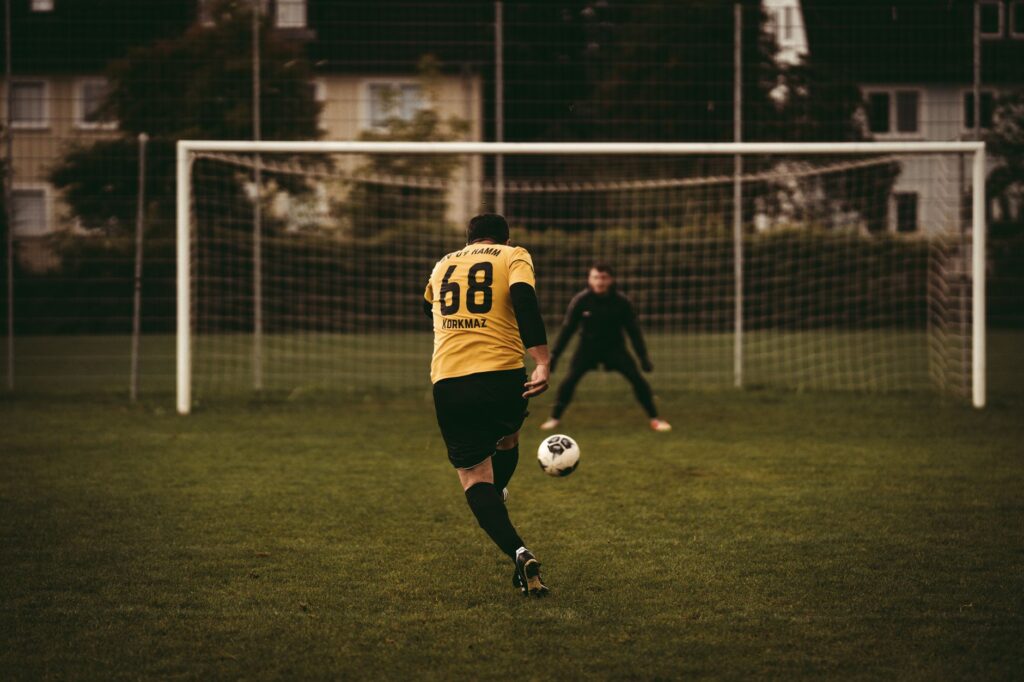
Few moments in sport carry as much tension as a soccer penalty shootout. Ninety minutes plus extra time, and still no winner — everything comes down to a series of one-on-one duels between shooter and goalkeeper, played out in near silence with an entire stadium holding its breath. Here’s how the format actually works, and why it produces some of the most unforgettable drama in the game.
When Shootouts Happen
Penalty shootouts are used exclusively in knockout competitions, where a winner must be determined and a draw simply isn’t an acceptable outcome. If a match remains level after 90 minutes of regulation, it proceeds to two 15-minute periods of extra time. Should the score still be tied after extra time concludes, the match moves directly to a penalty shootout to determine which team advances.
The Basic Format
Each team selects five players to take penalty kicks, alternating turns with the opposing team. Kicks are taken at the same goal for the entire shootout, chosen in advance by the referee, often based on factors like which end the crowd is more concentrated at or which goal has already been used for penalties during the match. After each team has taken five kicks, whichever side has scored more goals wins the shootout.
If the score remains tied after the initial five rounds, the shootout proceeds to sudden death — each team continues taking one kick at a time, and as soon as one team scores while the other misses in the same round, that team wins immediately. This can, in rare cases, continue for many rounds if both teams keep matching each other’s results.
The Rules Governing Each Kick
Only the goalkeeper and the designated shooter are involved in each attempt; all other outfield players must remain inside the center circle until it’s their turn. The goalkeeper must have at least part of one foot on or in line with the goal line at the moment the kick is taken, though modern enforcement of this rule has become notably stricter, with officials sometimes ordering retakes if a goalkeeper is judged to have moved too early off the line.
Any player who has been sent off during the match, or who is subbed off, becomes ineligible to participate. If a team has fewer available outfield players than their opponent, due to red cards during play, both sides must reduce their number of shooters to match the smaller squad, ensuring fairness in the number of kicks each side attempts.
Choosing the Shooting Order
Coaches typically build their shooting order strategically, often placing a confident, experienced penalty-taker first to settle nerves, while saving another reliable finisher for a potentially decisive fifth kick. Some managers deliberately place their best penalty-taker later in the order, betting that the pressure will be highest by that point and wanting their most composed player available for that exact moment.
The Psychology Behind the Drama
Shootouts are as much a mental battle as a technical one. Goalkeepers study opponents’ penalty tendencies in advance, sometimes referencing notes tucked into their socks or water bottles during the walk to goal. Shooters, meanwhile, must block out the noise of a hostile crowd and the memory of any earlier misses in the same match, often walking what feels like an impossibly long distance from the center circle to the penalty spot under the weight of an entire nation’s expectations.
Why Fans Love and Hate Them
Shootouts remain controversial precisely because they can feel like a cruel way to end a match built on ninety minutes of collective team effort, reduced instead to individual moments that can hinge on a single slip or a goalkeeper guessing correctly. Yet that same randomness is exactly why shootouts have produced some of the sport’s most iconic and heartbreaking memories, cementing their place as soccer’s ultimate high-stakes tiebreaker.
