Modern Full-Back Evolution: 2 European Players Redefining the Position in 2026

The evolution of the modern full-back by 2026 sees these players as critical tactical assets, combining defensive duties with significant offensive contributions, exemplified by two prominent European talents.
Football has always been a game of evolution, and few positions illustrate this better than the full-back. Once primarily defensive, the role has transformed dramatically. Today, full-backs are expected to be athletic, technically gifted, and tactically astute, contributing significantly in both defense and attack. This article delves into the evolution of the modern full-back, highlighting two European players who are set to redefine this critical position by 2026, showcasing their unique skills and influence on the beautiful game.
The Tactical Transformation of the Full-Back Role
The traditional full-back was largely confined to their defensive third, tasked with marking wingers and preventing crosses. However, modern football demands far more. Coaches now see full-backs as key components in building attacks, providing width, and even contributing to central midfield play. This shift began subtly but has accelerated rapidly, making the full-back one of the most physically demanding and tactically complex positions on the pitch.
This tactical transformation is not merely about individual skill but also about systemic changes in team formations and philosophies. Teams increasingly rely on full-backs to create overloads in wide areas, recycle possession, and even act as secondary playmakers. Their ability to cover vast distances, both defensively and offensively, is paramount. The blend of defensive solidity and attacking flair is what truly sets apart the elite modern full-back.
From Wing-Back to Inverted Full-Back
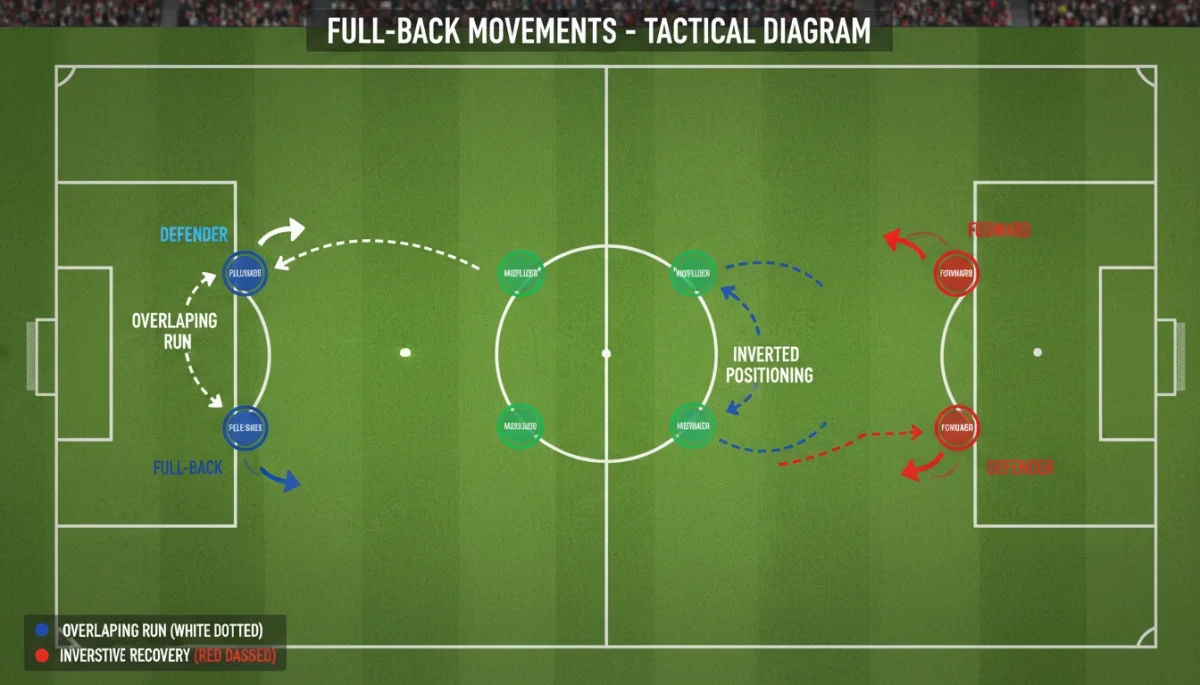
The journey from a traditional full-back to the multifaceted role we see today has involved several iterations. The rise of the wing-back in systems with three central defenders emphasized offensive contributions, but the modern full-back in a back-four system has taken this even further. Now, we often see inverted full-backs, who drift into central midfield to aid possession and create numerical advantages, or overlapping full-backs who provide crucial attacking width.
- Defensive Solidity: Still a core requirement, involving one-on-one defending, aerial duels, and tactical positioning.
- Attacking Output: Expected to deliver accurate crosses, make penetrating runs, and even score goals.
- Positional Versatility: Ability to adapt to different tactical schemes, including inverted roles or traditional wide play.
- Work Rate: Covering significant ground up and down the flank throughout the entire match.
The demands on these players are immense, requiring a combination of speed, stamina, technical ability, and footballing intelligence. The best full-backs are those who can seamlessly transition between these different roles, often within the same passage of play, making them indispensable to their teams’ success.
Player Profile 1: João Cancelo – The Versatile Maestro
João Cancelo stands as a prime example of the modern full-back, a player who has consistently redefined expectations for the position. His journey through various top European clubs has showcased his remarkable adaptability and technical prowess. By 2026, Cancelo continues to be a benchmark for what a full-back can achieve, blending defensive responsibility with an extraordinary attacking output that often blurs the lines between a defender and a midfielder.
What sets Cancelo apart is his comfort and effectiveness across multiple roles. He can operate as a traditional full-back, an attacking wing-back, or an inverted full-back, where he moves into central areas to influence play. This tactical flexibility makes him an invaluable asset, allowing his teams to adopt different formations and strategies without sacrificing quality. His ability to deliver precise passes, drive forward with the ball, and shoot from distance adds layers to his offensive game.
Cancelo’s Impact on Modern Tactics
Cancelo’s influence extends beyond his individual brilliance; he has shaped how coaches view the full-back position. His willingness and ability to play as an inverted full-back have been particularly impactful, providing a blueprint for how teams can achieve numerical superiority in midfield. This allows wingers to stay wider, creating space and stretching opposition defenses.
- Exceptional Passing Range: Capable of incisive through balls and accurate long passes from deep positions.
- Dribbling Ability: Confident in taking on defenders and progressing the ball up the pitch.
- Tactical Intelligence: Understands when to push forward, when to tuck in, and how to create space for teammates.
- Defensive Contributions: While renowned for attack, he possesses a strong defensive work rate and tackling ability.
His vision and creativity from wide or half-spaces are comparable to many central midfielders, demonstrating how the full-back role has expanded its remit. Cancelo’s consistent performance at the highest level ensures his status as one of the most influential full-backs of his generation, and his continued evolution will undoubtedly inspire future talents.
Player Profile 2: Alphonso Davies – The Explosive Dynamo
Alphonso Davies represents the epitome of explosive athleticism combined with refined technical skill. Bursting onto the European scene, Davies quickly established himself as one of the most electrifying full-backs in world football. By 2026, his pace, power, and attacking instincts continue to make him a nightmare for opposition defenses, redefining the full-back as a primary attacking weapon from deep positions.
Davies’s game is built on blistering speed and relentless energy. He can cover the entire left flank, making crucial defensive interventions one moment and then sprinting forward to join the attack the next. His ability to carry the ball at pace, beat defenders, and deliver dangerous crosses makes him a constant threat. This blend of raw physical attributes with growing tactical awareness makes him a truly modern phenomenon in the full-back role.
Davies’s Offensive Prowess and Defensive Growth
While often celebrated for his incredible attacking forays, Davies has also shown significant development in his defensive responsibilities. His recovery speed allows him to make up for any advanced positioning, often tracking back to thwart counter-attacks that would otherwise be devastating. This defensive growth has solidified his status as a complete full-back, capable of excelling in both phases of play.
- Unrivaled Speed: His acceleration and top-end speed are among the best in football, allowing him to dominate his flank.
- Dribbling Excellence: Proficient in close control and beating opponents in one-on-one situations.
- Crossing Accuracy: Delivers dangerous balls into the box, creating numerous scoring opportunities.
- Defensive Recovery: Exceptional ability to track back and prevent opposition attacks from developing.
Davies’s style of play pushes the boundaries of what is expected from a full-back. He is not just an auxiliary attacker but often the primary source of width and direct penetration for his team. His continued evolution promises to keep him at the forefront of the modern full-back discussion for years to come, influencing how teams approach wide play.
Key Attributes of the Modern Full-Back in 2026
As we look towards 2026, the blueprint for an elite full-back has become clearer, drawing heavily on the examples set by players like Cancelo and Davies. It’s a role that demands a unique blend of physical and mental attributes, coupled with a deep understanding of tactical nuances. The days of a full-back being solely a defensive stopper are long gone; now, they are central to a team’s overall strategy.
The modern full-back must possess exceptional fitness levels to cope with the constant up-and-down movement required. Technical proficiency, including accurate passing, dribbling, and crossing, is non-negotiable. Beyond these, tactical intelligence—the ability to read the game, make intelligent runs, and understand positional rotations—is what elevates good full-backs to great ones. They must be able to adapt to different formations and opposition strategies, often making split-second decisions under pressure.
Beyond Physicality: The Mental Game
While physical attributes like speed and stamina are crucial, the mental aspect of the modern full-back role cannot be overstated. Decision-making under pressure, positional awareness, and the ability to maintain concentration for 90 minutes are vital. Full-backs are often isolated in wide areas, requiring strong one-on-one defending skills and the confidence to take on attacking responsibilities.
- High Football IQ: Understanding team tactics and anticipating opposition movements.
- Composure Under Pressure: Making effective decisions in tight spaces and high-stakes situations.
- Leadership Qualities: Often directing play and organizing defensive lines from wide positions.
- Versatility: Adaptability to play in multiple roles and adjust to in-game tactical changes.
The mental fortitude required to consistently perform at the highest level, balancing defensive duties with offensive flair, is a hallmark of the best full-backs. Their role demands not just physical exertion but also continuous mental engagement, making them some of the most complete athletes in modern football.
The Future Landscape: How Full-Backs Will Continue to Evolve
Looking ahead, the evolution of the full-back position shows no signs of slowing down. As football tactics become increasingly sophisticated, so too will the demands on these players. We can anticipate even greater emphasis on technical versatility, allowing full-backs to seamlessly transition between defensive, midfield, and even attacking roles within a single game. The line between positions will continue to blur, with full-backs becoming true all-rounders.
The development of new training methodologies and sports science will also contribute to this evolution, enabling players to achieve higher levels of physical conditioning and tactical understanding. Data analytics will play an even larger role in identifying and developing full-backs who possess the specific skill sets required for modern football, focusing on attributes like progressive carries, defensive duels won, and chance creation from wide areas.
Impact of Technology and Data Analytics
Technology and data analytics are already shaping how players are scouted, developed, and utilized, and this trend will only intensify. For full-backs, this means a more granular understanding of their performance across all metrics, allowing for targeted training and tactical adjustments. Coaches will use data to optimize their positioning, movement patterns, and decision-making, ensuring they are always in the most effective areas of the pitch.
- Advanced Scouting: Identifying young talents with the specific attributes needed for the evolving full-back role.
- Personalized Training: Tailoring fitness and technical drills to enhance individual full-back strengths and address weaknesses.
- In-Game Adjustments: Using real-time data to inform tactical changes and optimize full-back positioning during matches.
- Injury Prevention: Leveraging sports science to manage workload and minimize the risk of injury for these high-intensity players.
The future full-back will likely be a highly specialized athlete, meticulously developed to meet the ever-increasing demands of the game. Their ability to influence all phases of play will make them even more central to team success, solidifying their status as one of football’s most dynamic and critical positions.
Challenges and Opportunities for Full-Backs
While the modern full-back enjoys a prominent role, the position also comes with significant challenges. The constant demand for both offensive and defensive contributions can lead to increased physical and mental fatigue. Balancing risk and reward, especially in attacking phases, requires excellent judgment. Moreover, the tactical flexibility required means players must be quick learners and adaptable to various coaching philosophies.
However, these challenges also present immense opportunities. Full-backs who can master the multifaceted demands of the role become indispensable. They are often among the first names on the team sheet, capable of influencing games in numerous ways. The increased visibility and importance of the position mean that successful full-backs are highly valued in the transfer market and often achieve significant recognition.
Navigating the Modern Game’s Demands
The modern game’s relentless pace and tactical complexity mean full-backs must be constantly evolving. They need to be comfortable in possession, adept at pressing, and capable of defending against some of the world’s best wingers. This holistic skill set is what defines success in the contemporary full-back role. The opportunity to impact the game from deep, through midfield, and in the final third makes the position incredibly exciting.
- Physical Endurance: Managing the demanding workload of constantly transitioning between attack and defense.
- Tactical Adaptability: Adjusting to different formations, opposition setups, and in-game tactical shifts.
- Mental Resilience: Handling the pressure of high-stakes moments and maintaining focus throughout matches.
- Skill Specialization: Developing unique attacking or defensive attributes that set them apart from peers.
For aspiring players, the full-back role offers a pathway to becoming a true all-rounder, capable of influencing every aspect of the game. The continued evolution of the position promises even more dynamic and exciting performances from these crucial players in the years to come.
| Key Aspect | Description |
|---|---|
| Role Transformation | From defensive-focused to integral offensive and defensive contributors. |
| João Cancelo | Exemplifies tactical versatility, operating as inverted full-back and playmaker. |
| Alphonso Davies | Showcases explosive pace and attacking prowess, redefining wing play from defense. |
| Future Outlook | Continued evolution towards all-rounders, driven by data and tactical innovation. |
Frequently Asked Questions About Modern Full-Backs
A modern full-back in 2026 is characterized by exceptional athleticism, tactical versatility, and significant contributions in both defensive and offensive phases, often acting as a secondary playmaker or wide attacker.
Historically defensive, the role evolved through wing-backs to today’s inverted or overlapping full-backs. They now provide width, create overloads, and contribute to ball progression and chance creation from deep.
Cancelo redefines versatility with his inverted playmaking and technical skill, while Davies embodies explosive pace and direct attacking threat, pushing the boundaries of offensive full-back play.
Future full-backs need high football IQ, exceptional physical endurance, technical proficiency in passing and dribbling, and strong mental resilience to manage the dual demands of the role.
Technology and data analytics will further refine scouting, personalized training, and in-game tactical adjustments, optimizing full-back performance and development to meet evolving demands.
Conclusion
The evolution of the modern full-back is a testament to football’s dynamic nature, with players like João Cancelo and Alphonso Davies leading the charge in redefining what the position entails by 2026. Their blend of defensive grit, attacking flair, and tactical intelligence has elevated the full-back role from a supporting act to a central pillar of team success. As the game continues to evolve, the demands on these athletes will only increase, pushing the boundaries of athleticism, skill, and tactical understanding. The future promises even more exciting iterations of this crucial position, making full-backs some of the most influential and captivating players on the pitch.
