Positional Versatility: Top 3 European Players in Multiple Roles (2026)
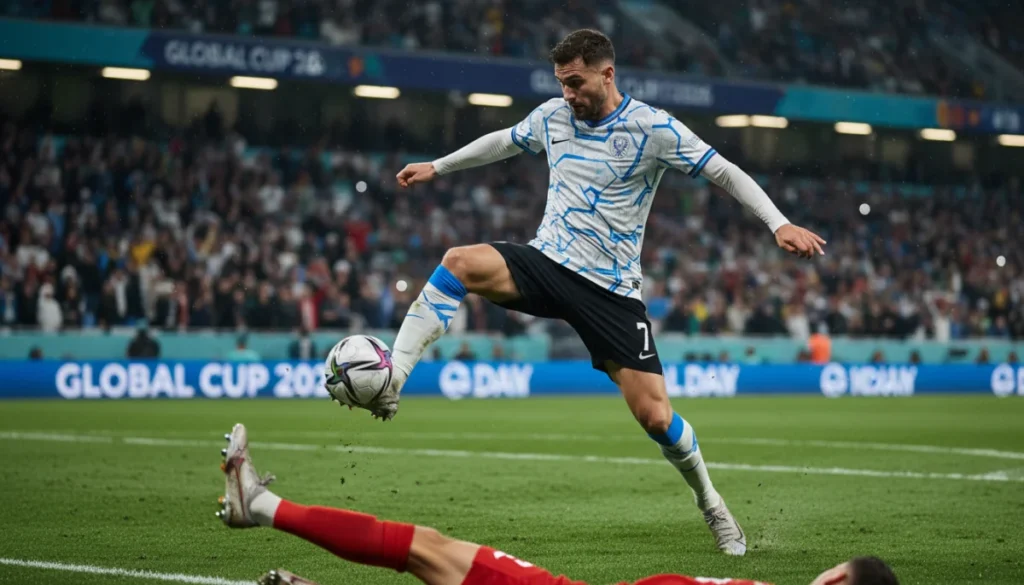
The 2026 season highlights three European players whose exceptional positional versatility is redefining tactical approaches in football. Their ability to perform effectively across multiple roles offers significant strategic advantages and profound impacts on team dynamics and success.
In the ever-evolving landscape of modern football, the ability of a player to perform effectively in various positions has become an invaluable asset. The 2026 season has particularly shined a spotlight on this phenomenon, with several European talents demonstrating remarkable adaptability. This article delves into positional versatility 2026, focusing on three exceptional European players who have mastered the art of excelling in multiple roles, thereby transforming their teams’ tactical approaches and achieving significant on-field success.
the rise of tactical flexibility in modern football
Modern football demands more than just specialized talent; it requires players who can adapt to fluid tactical systems and cover multiple responsibilities. The days of rigid formations and fixed roles are gradually giving way to dynamic strategies where players are expected to contribute in various phases of play, often switching positions within a single match. This shift is driven by a desire for unpredictability, better defensive coverage, and enhanced offensive output.
Coaches increasingly prioritize versatility when building their squads, recognizing that a player capable of fulfilling several roles offers immense strategic advantages. Such players provide depth, allow for in-game tactical adjustments without substitutions, and can exploit opponents’ weaknesses more effectively. The physical and mental demands on these athletes are immense, requiring not only technical prowess but also exceptional game intelligence and stamina.
coaching philosophy and player development
The emphasis on tactical flexibility begins at the youth academy level, where aspiring footballers are often trained in multiple positions to broaden their skill sets. This holistic approach ensures that players develop a comprehensive understanding of the game, rather than being confined to a single role. For senior teams, this translates into more adaptable players who can seamlessly transition between defensive, midfield, and even attacking duties.
- Enhanced tactical options: Versatile players allow coaches to deploy various formations.
- Improved squad depth: Reduces reliance on single-position specialists.
- In-game adjustments: Facilitates seamless tactical shifts during matches.
- Exploiting weaknesses: Allows for quick changes to target opposition vulnerabilities.
The impact of tactical flexibility is evident across Europe’s top leagues, where teams with a high number of versatile players often demonstrate greater resilience and competitive edge. These players are not merely filling gaps; they are actively shaping the flow of the game, making crucial contributions regardless of their starting position. Their ability to perform consistently at a high level across different roles is a testament to their dedication and the evolving nature of the sport.
player 1: the midfield maestro with defensive prowess
Our first standout is a central midfielder renowned for his exceptional ball control and vision, who has also proven to be an impenetrable force in defensive duties. This player, let’s call him ‘Elias Karlsson’ from Sweden, has been a revelation in the 2026 season, demonstrating how a deep-lying playmaker can also be an elite ball-winner. His ability to dictate play from the midfield while simultaneously breaking up opposition attacks makes him a truly unique talent.
Karlsson’s primary role typically involves orchestrating attacks, distributing passes, and controlling the tempo of the game. However, a significant aspect of his positional versatility 2026 is his seamless transition into a defensive midfield role when his team is under pressure. He exhibits an extraordinary understanding of defensive positioning, often stepping in to intercept passes, win tackles, and track back diligently. This dual capability provides his team with a crucial balance, allowing them to maintain offensive threat without compromising defensive solidity.

His physical attributes, combined with his sharp tactical mind, enable him to excel in both facets of the game. Karlsson’s relentless work rate and ability to read the game often see him covering vast areas of the pitch, making key contributions in both boxes. This makes him indispensable to his club, as he effectively performs the roles of two players, freeing up other teammates to focus on their specialized tasks.
key attributes contributing to his versatility
Elias Karlsson’s success in multiple roles stems from a combination of innate talent and diligent training. His passing range is exceptional, allowing him to launch attacks from deep or thread intricate through balls in the final third. Defensively, his tackling technique is clean and effective, rarely resulting in fouls. He also possesses remarkable aerial ability for a midfielder, winning crucial headers in both defensive and offensive set pieces.
- Passing Accuracy: Consistently delivers precise passes under pressure.
- Tackling Efficiency: High success rate in winning back possession.
- Game Reading: Anticipates plays, intercepts passes, and cuts off passing lanes.
- Stamina: Maintains high performance levels throughout 90 minutes across different roles.
Karlsson’s impact goes beyond individual statistics; he elevates the performance of those around him. His presence allows full-backs to push higher, wingers to cut inside, and strikers to focus solely on scoring. He is the glue that holds his team’s tactical structure together, a true embodiment of modern football’s demand for multi-faceted players.
player 2: the attacking full-back turned winger
Our second versatile sensation is a full-back who has redefined the role, transitioning effortlessly into an attacking winger. Hailing from Portugal, let’s call him ‘João Silva’, this player has become a nightmare for opposition defenses in the 2026 season. His electrifying pace, dribbling ability, and crossing prowess are attributes typically associated with traditional wingers, yet he consistently delivers them from a deeper starting position, or even higher up the pitch when deployed explicitly as a winger.
Silva’s journey began as a conventional attacking full-back, known for his overlapping runs and defensive contributions. However, his coach recognized his immense offensive potential and began deploying him in more advanced roles. This strategic shift unlocked a new dimension in his game, allowing him to focus more on creating goal-scoring opportunities and directly threatening the opposition’s goal. His ability to switch between these roles mid-game or from one match to the next showcases his incredible adaptation and understanding of different tactical demands.
When playing as a full-back, Silva provides width, delivers dangerous crosses, and tracks back diligently to defend. When pushed up as a winger, he uses his speed and trickery to beat defenders, cut inside, and take shots, or create chances for strikers. This dual threat makes him incredibly difficult to mark, as defenders are unsure whether to commit to him defensively or try to contain his attacking runs. His positional versatility 2026 is a key factor in his team’s dynamic attacking play.
seamless transition and offensive output
The transition from full-back to winger is not merely about moving further up the pitch; it requires a different defensive mindset and a greater emphasis on direct attacking play. João Silva has mastered this, demonstrating an uncanny ability to contribute significantly in both capacities. His defensive awareness as a full-back ensures that even when playing as a winger, he is quick to track back and support his defense, providing crucial cover.
- Exceptional Pace: Allows him to beat defenders and recover defensively.
- Dribbling Skills: Can take on multiple opponents and create space.
- Crossing Accuracy: Delivers pinpoint crosses from wide areas.
- Goal Threat: Capable of scoring from various positions and angles.
Silva’s offensive output as a full-back is already impressive, but as a winger, his goal contributions and assists have skyrocketed. This adaptability has not only benefited his club but has also caught the eye of national team selectors, making him a prime example of how versatility can elevate a player’s career to elite levels.
player 3: the central defender with midfield elegance
Our third extraordinary player is a central defender from Germany, ‘Maximilian Richter’, who possesses the rare quality of midfield elegance. In the 2026 season, Richter has consistently demonstrated an ability to step out of defense and operate effectively as a holding midfielder, showcasing remarkable composure on the ball and an astute tactical mind. This blend of defensive solidity and midfield playmaking is incredibly rare and highly valuable.
Richter’s primary role is that of a commanding center-back, known for his aerial dominance, strong tackling, and leadership at the back. However, his passing range, vision, and ability to break lines with precise passes are attributes that often see him deployed in a defensive midfield role. When playing as a midfielder, he acts as a deep-lying orchestrator, shielding the defense while initiating attacks with his intelligent distribution. His positional versatility 2026 has allowed his team to experiment with various formations, often surprising opponents.
His transition from defense to midfield is seamless, largely due to his excellent positional sense and calmness under pressure. Richter rarely loses possession and is adept at winning second balls, providing a stable platform for his team to build attacks. His presence in midfield adds an extra layer of security, allowing more attack-minded midfielders to push forward, knowing that the backline is well-protected.
the blend of leadership and technical skill
Maximilian Richter embodies the modern defender who is not just tasked with preventing goals but also with initiating play. His leadership qualities are evident whether he is marshaling the defense or directing the midfield. Technically, he is superb; his first touch is impeccable, and he rarely gives the ball away, even in tight situations. This technical proficiency is what allows him to excel in a more advanced role, where ball retention and distribution are paramount.
- Passing Range: Accurate long and short passes to initiate attacks.
- Defensive Interceptions: Reads the game well to break up opposition play.
- Composure: Remains calm under pressure, making smart decisions.
- Leadership: Organizes the defense and midfield, guiding teammates.
Richter’s ability to switch between these demanding roles without a drop in performance highlights his elite-level understanding of the game and his physical conditioning. He is a truly transformative player, capable of influencing the game from different areas of the pitch, making him one of the most valuable assets in European football.
tactical implications of positional versatility
The emergence of highly versatile players like Karlsson, Silva, and Richter has profound tactical implications for football teams. Coaches are no longer confined to rigid systems; instead, they can design fluid formations that adapt to the opponent, the match situation, and the availability of players. This tactical flexibility creates a more dynamic and unpredictable style of play, which is increasingly difficult for opposition teams to counter.
One significant advantage is the ability to change formation and strategy within a game without making substitutions. For instance, if a team is struggling to break down a compact defense, a player like João Silva can be pushed further up the pitch to create more attacking threat. Conversely, if a team needs to protect a lead, a player like Elias Karlsson can drop deeper to reinforce the midfield and defense. This adaptability saves valuable substitution slots for fresh legs or more specialized roles.
benefits for team performance and player development
Beyond in-game adjustments, positional versatility also enhances overall team performance and contributes to the development of other players. When key players can cover multiple roles, it reduces the pressure on younger players or those returning from injury, allowing them to ease back into the team without being forced into unfamiliar positions. This fosters a more cohesive and supportive team environment.
- Increased Unpredictability: Makes teams harder to analyze and defend against.
- Optimized Squad Rotation: Reduces fatigue and injury risk for key players.
- Enhanced Player Understanding: Versatile players understand various roles better.
- Greater Cohesion: Promotes better communication and teamwork.
The presence of versatile players also encourages a higher level of football intelligence across the squad. Teammates learn to anticipate movements and understand the tactical nuances associated with different positions, leading to more fluid transitions and better collective decision-making. This collective growth is a direct result of embracing positional versatility 2026 as a core philosophy.
the future of european football: versatility as a core competency
Looking ahead, it’s clear that positional versatility will continue to be a defining characteristic of elite European football. The physical demands of the game are increasing, and teams that can field players capable of performing multiple functions will have a significant edge. This trend will inevitably influence scouting, player development, and transfer market strategies.
Academies will further refine their training programs to produce multi-faceted players from a young age, emphasizing tactical awareness and technical proficiency across various roles. Coaches will continue to seek out players who can offer solutions in more than one area of the pitch, making versatility a premium attribute in the transfer market. Players who specialize in only one role may find it harder to secure top-tier contracts unless their talent in that specific role is truly exceptional.
The tactical battles in future matches will undoubtedly feature complex systems where players seamlessly switch roles, creating an intricate dance of movement and positioning. The ability to adapt on the fly will become a hallmark of successful teams, and players like Karlsson, Silva, and Richter are pioneers in this new era. Their contributions in the 2026 season serve as a powerful testament to the value of being a truly versatile footballer.
impact on scouting and transfer strategies
Scouts are now actively looking for players who demonstrate potential in multiple positions, not just their primary one. This means assessing a player’s technical ability, tactical intelligence, physical attributes, and mental resilience to perform in diverse roles. The transfer market will reflect this demand, with versatile players commanding higher fees due to their strategic value.
- Holistic Player Assessment: Evaluating skills for various roles.
- Increased Market Value: Versatile players become more sought after.
- Strategic Acquisitions: Teams prioritize players who fill multiple squad needs.
- Long-Term Squad Planning: Building teams with inherent flexibility.
Ultimately, the future of European football is bright for those who embrace adaptability and continuous learning. The players highlighted in the 2026 season are not just stars; they are architects of a new tactical philosophy, showcasing how positional versatility 2026 is not just an advantage, but a necessity for sustained success at the highest level.
analyzing player development and tactical evolution
The evolution of players like Elias Karlsson, João Silva, and Maximilian Richter is not accidental; it’s a result of deliberate player development strategies combined with individual dedication. These players have spent years honing their craft, often starting in one position and gradually expanding their repertoire under the guidance of forward-thinking coaches. Their journey underscores the importance of continuous learning and adaptability in a sport that never stands still.
Tactical evolution plays a crucial role in fostering such versatility. Coaches are constantly experimenting with new formations and player assignments to gain an edge. This environment encourages players to step out of their comfort zones and learn new aspects of the game. For example, a central midfielder might be asked to cover a wider area, or a defender might be tasked with initiating attacks, pushing them to develop new skills.
The success of these versatile players also inspires the next generation of footballers. Young athletes now see the tangible benefits of being able to play in multiple positions, motivating them to adopt a broader approach to their training. This creates a positive feedback loop, where the demand for versatility drives player development, which in turn fuels further tactical innovation in the sport. The positional versatility 2026 trend is a testament to this dynamic.
the role of technology and analytics
Advanced sports analytics and technology are also contributing significantly to understanding and enhancing positional versatility. Data analysts can now provide coaches with detailed insights into a player’s performance across different roles, highlighting strengths and areas for improvement. This data-driven approach allows for more informed decisions regarding player deployment and training programs.
- Performance Data: Quantifying player effectiveness in various roles.
- Tactical Simulations: Using technology to visualize role changes and their impact.
- Personalized Training: Tailoring drills to enhance specific versatile skills.
- Injury Prevention: Monitoring workload to ensure players can sustain multiple roles.
The synergy between player development, tactical evolution, and technological advancements is creating an environment where positional versatility thrives. As we move further into the 2026 season and beyond, we can expect to see even more players embrace and excel in multiple roles, making European football an even more exciting and strategically rich spectacle.
| Key Aspect | Brief Description |
|---|---|
| Elias Karlsson | Swedish midfield maestro excelling as a deep-lying playmaker and defensive shield. |
| João Silva | Portuguese attacking full-back who seamlessly transitions into a dangerous winger. |
| Maximilian Richter | German central defender displaying elegance and effectiveness in a holding midfield role. |
| Tactical Impact | Versatility enables fluid formations, in-game adjustments, and greater team unpredictability. |
frequently asked questions about positional versatility
Positional versatility refers to a player’s ability to perform effectively and contribute significantly across multiple different roles or positions on the football pitch. This includes adapting to various tactical demands, responsibilities, and skill sets required for each role, often within the same match or across different games.
In 2026, positional versatility is crucial because it offers tactical flexibility, allowing coaches to make in-game adjustments without substitutions. It provides squad depth, enables teams to exploit opponent weaknesses, and makes a team more unpredictable, enhancing overall performance and competitive advantage in modern football.
Coaches develop versatile players through holistic training programs from youth academies, emphasizing tactical awareness, technical skills across various positions, and game intelligence. They encourage players to understand different roles, experiment with new assignments, and provide data-driven insights to refine their multi-positional capabilities.
Benefits include increased tactical options, improved squad depth, seamless in-game adjustments, and the ability to surprise opponents. Versatile players also foster greater team cohesion, reduce reliance on single-position specialists, and can cover for injuries or fatigue more effectively, contributing to sustained success.
Yes, it’s highly probable. As football continues to evolve, versatility is becoming a core competency rather than just a bonus. The increasing physical and tactical demands mean players who can perform in multiple roles offer significant strategic value, making it a near-standard requirement for those aspiring to play at the highest levels.
conclusion
The 2026 season has undeniably cemented the importance of positional versatility in European football. The performances of Elias Karlsson, João Silva, and Maximilian Richter serve as prime examples of how players excelling in multiple roles can fundamentally alter team dynamics and tactical outcomes. Their ability to seamlessly transition between demanding positions not only provides their respective clubs with invaluable strategic flexibility but also pushes the boundaries of player development and coaching philosophy. As the sport continues to evolve, the demand for such multi-faceted talents will only grow, making versatility a defining characteristic of future footballing success. These players are not just stars; they are pioneers shaping the tactical landscape of tomorrow.
