Zonal Marking Drills: Reduce Shots on Target by 30% in 2026
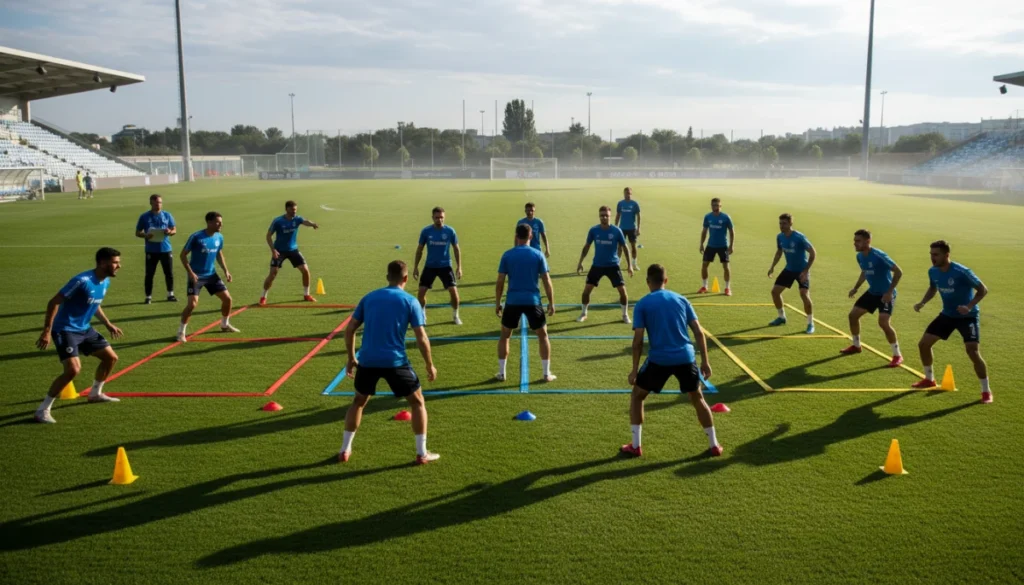
Implementing effective zonal marking drills is crucial for building a resilient defense, aiming to significantly reduce shots on target by 30% by 2026.
Are you looking for practical solutions: building a resilient defense – 6 drills to implement a zonal marking system that reduces shots on target by 30% in 2026? In the dynamic world of football, a strong defense is often the bedrock of success. This article delves into actionable strategies and specific drills designed to transform your team’s defensive capabilities, ensuring a significant reduction in opponent shots.
Understanding the Zonal Marking System
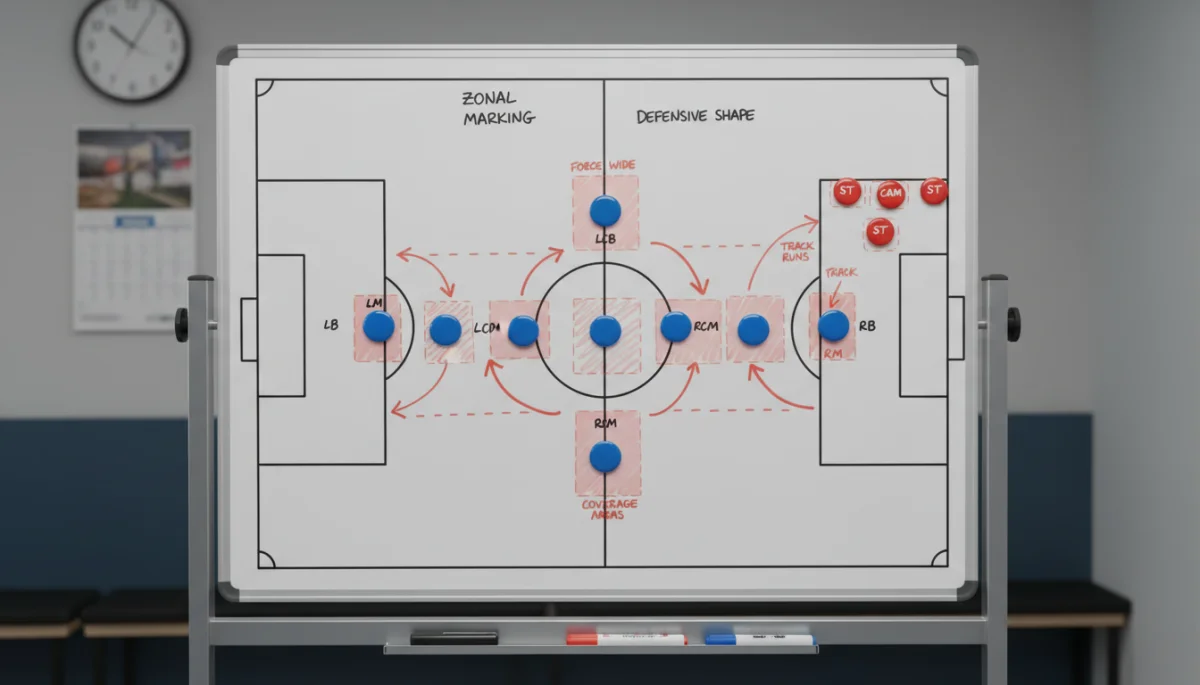
Zonal marking is a defensive strategy where each player is responsible for a specific area of the pitch, rather than a particular opponent. When an opponent enters a player’s zone, that player becomes responsible for marking them. This system emphasizes collective defense, communication, and positional awareness, aiming to deny space and intercept passes.
The core principle of zonal marking is to control space. Instead of chasing individual opponents across the pitch, players maintain their positions within a defined zone. This approach ensures that there are always players covering key areas, making it difficult for the opposition to penetrate the defense. It promotes a more organized and less physically demanding defensive effort when executed correctly.
Key Principles of Zonal Marking
To effectively implement a zonal marking system, several key principles must be consistently applied. These principles ensure that all players understand their roles and responsibilities within the defensive structure.
- Compactness: Players must stay close together, both horizontally and vertically, to minimize the space available for opponents to play through.
- Communication: Constant verbal and non-verbal communication is vital for players to adjust their positions, warn teammates of threats, and coordinate their movements.
- Positional Awareness: Each player needs to understand their zone and how their position relates to their teammates, the ball, and the opposition.
- Pressing Triggers: Teams should have clear triggers for when to press the ball, ensuring a coordinated and effective defensive action rather than individual rushes.
The success of zonal marking hinges on the collective understanding and execution of these principles. When players move as a unit, anticipate passes, and close down space effectively, the system becomes incredibly difficult for opponents to break down. This foundational understanding sets the stage for developing robust defensive drills.
Drill 1: The Compactness Grid
The Compactness Grid drill is fundamental for teaching players how to maintain a tight defensive shape and deny space. This drill focuses on the horizontal and vertical compactness required in a zonal marking system, ensuring players move as a cohesive unit.
Set up a small grid, typically 20×20 yards, with a 4v4 or 5v5 scenario. The objective for the defending team is to maintain a compact shape, shifting collectively as the ball moves. The attacking team tries to penetrate the defensive lines with passes or dribbles. This drill emphasizes communication and disciplined movement.
Executing the Drill
Start with the defending team in a narrow formation, covering the central areas. As the ball is passed around the perimeter by the attacking team, the defenders must slide across, always keeping the ball and their teammates in sight. The focus is on preventing passes through the middle and forcing the play wide.
- Initial Setup: Defenders form a tight block in the center of the grid.
- Ball Movement: Attackers pass the ball around the outside, trying to create gaps.
- Defensive Shift: Defenders move laterally and vertically, maintaining their shape.
- Communication: Players call out positions, potential threats, and shifting instructions.
This drill helps players understand the importance of immediate reactions to ball movement and how to adjust their body shape to influence the opponent’s passing options. It’s about being proactive in denying space, rather than reactive to an attack. The Compactness Grid builds the essential habits for a solid zonal defense.
Drill 2: The Pressure and Cover Exercise
The Pressure and Cover Exercise is designed to teach defenders when and how to press the ball while ensuring adequate cover behind them. This drill is crucial for preventing opponents from having time and space to execute dangerous passes or shots, a key aspect of reducing shots on target.
Divide the pitch into thirds. In the middle third, set up a 6v4 scenario where the six players are attackers and the four players are defenders. The attackers aim to pass the ball from one end of the middle third to the other. The defenders’ goal is to win possession or force errors by applying coordinated pressure and cover.
Dynamic Defensive Roles
One defender applies immediate pressure to the ball carrier, while the other three defenders position themselves to cover passing lanes and potential runs. As the ball moves, the roles shift dynamically. The player closest to the ball presses, and teammates adjust their positions to provide support and cover.
- Pressing Player: Closes down the ball carrier quickly, attempting to force a mistake or a backward pass.
- Covering Players: Position themselves to intercept passes, block shots, and support the pressing player.
- Collective Movement: All defenders move in sync, maintaining a balanced shape.
- Anticipation: Defenders must anticipate the next pass and adjust their positions early.
This exercise refines individual defensive actions within a collective framework. It teaches players to read the game, understand when to commit to a tackle or interception, and when to hold their position for cover. Mastering pressure and cover is vital for disrupting opponent attacks before they reach dangerous areas, directly contributing to fewer shots on goal.
Drill 3: Defensive Line Movement with Offside Trap
The Defensive Line Movement with Offside Trap drill integrates coordinated backline movement with the strategic use of the offside rule. This advanced drill helps defenders understand how to work as a unit to control attacking runs and minimize threats by catching opponents offside.
Set up a half-pitch scenario with a defensive line (four defenders) and a goalkeeper against three or four attackers. The coach initiates play by passing to an attacker. The defenders must communicate and move together to push up, hold a high line, or drop back, depending on the situation, with the aim of catching attackers offside.
Synchronization and Communication
The key to this drill is the synchronization of the defensive line. All four defenders must move in unison, guided by the central defenders and the goalkeeper. The timing of their push-up or drop-back is critical to successfully executing an offside trap. Communication is paramount, with players calling out “up,” “back,” or “hold” to ensure everyone is on the same page.
- Unified Movement: All defenders move together as a single unit, avoiding gaps.
- Verbal Cues: Clear and concise communication among defenders is essential for coordination.
- Visual Cues: Defenders must read the body language of attackers and the ball carrier.
- Goalkeeper’s Role: The goalkeeper acts as the eyes behind the defense, providing vital instructions.
This drill hones the defensive line’s ability to act as a coordinated barrier, effectively reducing the space available to attackers in dangerous areas. By mastering the offside trap, teams can significantly limit clear-cut scoring opportunities, thereby contributing to the goal of reducing shots on target by 30%.
Drill 4: Transition Defense (Attack to Defense)
The Transition Defense drill focuses on the critical moments when a team loses possession and must quickly switch from an attacking mindset to a defensive one. Rapid and organized transition is a cornerstone of effective zonal marking, preventing opponents from launching swift counter-attacks.
Set up a full-pitch 8v8 or 10v10 game. The coach or an assistant will have extra balls. Whenever possession is lost by a team, the coach immediately plays a new ball to the opposing team, initiating a quick counter-attack. The team that just lost possession must immediately transition to a defensive shape, applying zonal marking principles.
Immediate Reaction and Reorganization
Upon losing the ball, players must not just track back but immediately reorganize into their zonal defensive positions. This involves the closest players pressing the new ball carrier, while others drop back to cover space and establish a compact shape. The speed and intelligence of this transition can often dictate whether an opponent gets a shot away.
- Instant Reaction: Players must react immediately to the loss of possession.
- Defensive Shape: Quick return to a compact, zonal defensive formation.
- First Defender: The player closest to the ball applies immediate pressure.
- Team Support: Teammates provide cover and block passing lanes during the transition.
This drill simulates real-game situations where turnovers are frequent. By repeatedly practicing quick transitions, players develop the habit of immediate defensive responsibility, ensuring that the team is rarely caught out of shape. This proactive defensive mindset is crucial for consistently reducing the number of shots on target.
Drill 5: Defending Crosses and Set Pieces
Defending crosses and set pieces is a specialized aspect of zonal marking that requires unique drills. These situations often lead to high-percentage scoring chances, so mastering them is paramount for reducing shots on target. This drill focuses on disciplined positioning and aggressive challenging.
Set up a scenario with a crosser on the wing and several attackers in the box against a zonal defensive unit. The defenders are responsible for specific areas within the penalty box. Similarly, for set pieces, assign players to cover zones around the goal and mark key attacking players.
Zonal Responsibilities in the Box
In a zonal system, defenders cover specific areas in the penalty box, rather than individual attackers. This allows them to focus on the flight of the ball and clear it from their zone. For set pieces, a hybrid approach might be used, combining zonal marking with some man-to-man responsibilities for key threats.
- Zone Coverage: Defenders are assigned specific areas in the box to clear incoming crosses.
- First Contact: Emphasize challenging the ball in the air and preventing attackers from getting clean headers.
- Second Ball: Players must be ready to react to clearances and win second balls around the box.
- Goalkeeper Communication: The keeper plays a crucial role in directing defenders and claiming crosses.
This drill reinforces the importance of collective responsibility in critical areas. By perfecting defensive organization during crosses and set pieces, teams can significantly reduce the number of dangerous shots conceded from these high-probability situations. It’s a targeted approach to a common defensive vulnerability.
Drill 6: Game-Realistic Zonal Application
The Game-Realistic Zonal Application drill brings all the learned principles and individual drills together into a comprehensive, match-like scenario. This drill helps players apply zonal marking effectively under pressure, mimicking the unpredictability of a real game.
Organize an 11v11 scrimmage or an 8v8 small-sided game on a larger pitch. The coach’s role is to observe and provide immediate feedback on how the defending team applies their zonal marking system. The emphasis is on fluid movement, communication, and maintaining defensive shape throughout different phases of play.
Continuous Feedback and Adjustment
During this drill, the coach should frequently stop play to highlight successful zonal movements, correct positional errors, and reinforce communication patterns. Players should be encouraged to make their own decisions within the zonal framework, learning to adapt to various attacking schemes.
- Full-Game Simulation: Apply zonal marking in a realistic match setting.
- Coaching Interventions: Coach provides real-time feedback and makes tactical adjustments.
- Decision-Making: Players are encouraged to make autonomous decisions within the zonal system.
- Adaptability: Practice adapting the zonal shape against different opponent formations and attacking patterns.
This final drill is crucial for cementing the habits and understanding developed in the previous exercises. It allows the team to experience the full benefits of a well-implemented zonal marking system, leading to a more resilient defense and, ultimately, a tangible reduction in shots on target. Continuous practice and refinement in game-realistic scenarios are key to achieving the 30% reduction goal by 2026.
| Key Drill | Brief Description |
|---|---|
| Compactness Grid | Teaches maintaining tight defensive shape and denying space through collective movement. |
| Pressure and Cover | Develops coordinated pressing and covering actions to disrupt opponent attacks. |
| Defensive Line Movement | Synchronizes backline movement for offside traps and controlling attacking runs. |
| Transition Defense | Focuses on rapid reorganization from attack to defense upon losing possession. |
Frequently asked questions about zonal marking
The primary goal of zonal marking is to control space on the pitch, denying opponents easy access to dangerous areas. By assigning players to specific zones, the team aims to maintain a compact defensive shape, force play wide, and intercept passes, thereby minimizing scoring opportunities.
Zonal marking reduces shots on target by creating a dense defensive block that limits space for attackers to shoot from. It forces opponents into wider, less threatening areas and encourages collective pressing, which disrupts attacking rhythm and prevents clear-cut chances from developing.
Effective communication in zonal marking involves constant verbal cues about opponent positions, ball movement, and defensive adjustments. Players must call out when to press, when to cover, and when to shift as a unit, ensuring seamless coordination and preventing defensive breakdowns.
Yes, many modern teams employ a hybrid defensive system that combines elements of both zonal and man-marking. This often involves zonal marking for general play but assigning specific players to man-mark key opponents during set pieces or when a particular threat emerges in their zone.
The goalkeeper is crucial in a zonal marking defense, acting as the ‘eyes’ behind the backline. They provide vital communication regarding opponent runs, defensive line positioning, and when to push up or drop back. Their ability to organize and command the defense is key to success.
Conclusion
Implementing a robust zonal marking system through targeted and progressive drills is a strategic imperative for any football team aiming for defensive excellence. The six drills outlined provide a practical roadmap for coaches to instill the necessary habits of compactness, communication, and coordinated movement. By consistently applying these principles, teams can build a resilient defense that effectively denies space, disrupts opponent attacks, and ultimately achieves the ambitious goal of significantly reducing shots on target by 30% by 2026. Defensive solidity is not just about individual brilliance; it’s about collective intelligence and unwavering commitment to a tactical framework.
